
![🟡 [RFK Jr. Vaccine Cuts: Strategic Drift or Political Alignment?]](https://images.squarespace-cdn.com/content/v1/685a879d969073618e9775db/1754976914667-XL0MPF74COUAW73XSVQI/08dc-trump-vaccines-hlvw-superJumbo.webp)
🟡 [RFK Jr. Vaccine Cuts: Strategic Drift or Political Alignment?]
The foundational trials for mRNA COVID-19 vaccines—while demonstrating robust short-term efficacy—were structurally constrained in detecting rare or delayed adverse events such as myocarditis. Median follow-up periods of two to six months, combined with exclusion of individuals with preexisting cardiac or allergic histories, limited real-world applicability. A key excipient, polyethylene glycol (PEG)—also used in cross-linked hyaluronic acid fillers—is a known allergen capable of triggering severe hypersensitivity reactions in previously sensitized individuals. BBIU’s review of pivotal studies (NCT04368728, NCT04470427, NCT04816643, NCT04847050, NCT04848584, NCT04852861) indicates that serious adverse events may have been underrepresented due to classification thresholds and truncated observation windows, underscoring the need for larger cohorts, PEG-specific screening, and >12-month monitoring to ensure platform-wide safety assurance.
![🟡 [Trump Pushes China to Quadruple Soybean Purchases – Tariff Truce Extension Adds Strategic Weight]](https://images.squarespace-cdn.com/content/v1/685a879d969073618e9775db/1754970727846-UH39M8LKF3I20P9GX8U0/3f0caf01d8aaa68800565273647f1a14.webp)
🟡 [Trump Pushes China to Quadruple Soybean Purchases – Tariff Truce Extension Adds Strategic Weight]
Trump’s demand that China quadruple U.S. soybean purchases is less an agricultural negotiation than a multi-vector strategic strike: it forces Beijing out of its comfort zone, shores up Midwest electoral support ahead of November, and undercuts Brazil’s economic base by displacing its dominant share of China’s soybean market—amplifying the impact of recent 50% U.S. tariffs on Brazilian exports.
![🟡 [U.S. Executive Order: Further Modifying Reciprocal Tariff Rates with the PRC]](https://images.squarespace-cdn.com/content/v1/685a879d969073618e9775db/1754961547660-IT1C86XRRNW05A2G5VJI/0004519870_001_20250812055110564.jpg)
🟡 [U.S. Executive Order: Further Modifying Reciprocal Tariff Rates with the PRC]
The true contest between Washington and Beijing in late 2025 is not purely economic, but temporal. By extending the tariff cliff to November 12—eight days after the U.S. election—Trump has engineered a leverage window in which domestic political costs are minimized while pressure on China is maximized. For the PRC, holding the CPC National Congress in mid-October, rather than November, is the only viable path to consolidate leadership, finalize contingency measures, and project unity before this confrontation. Delay risks facing U.S. escalation under transitional leadership, with fractured internal coordination and diminished ability to dictate the terms of negotiation.
![🟡 [South Korea Presidential Approval Hits Post-Inauguration Low Ahead of U.S. Trade Pact Finalization]](https://images.squarespace-cdn.com/content/v1/685a879d969073618e9775db/1754877897801-WJLW9NJJJ5AXFRZ3MQAA/0003461112_001_20250811101116825.jpg)
🟡 [South Korea Presidential Approval Hits Post-Inauguration Low Ahead of U.S. Trade Pact Finalization]
Lee Jae-myung’s sharp 6.8-point approval drop reflects a convergence of crises—U.S. trade asymmetry, unpopular tax reform, and a deflective military narrative—leaving him trapped between domestic erosion and external dependency. With North Korea tied to Russia and no European fallback, any real pivot toward Moscow would carry existential costs. Pragmatic by nature, Lee is likely to maintain pro-Ukraine rhetoric, limit material commitments, and rely on symbolic sovereignty gestures—until the August 25 summit with Trump forces decisions that may be irreversible.
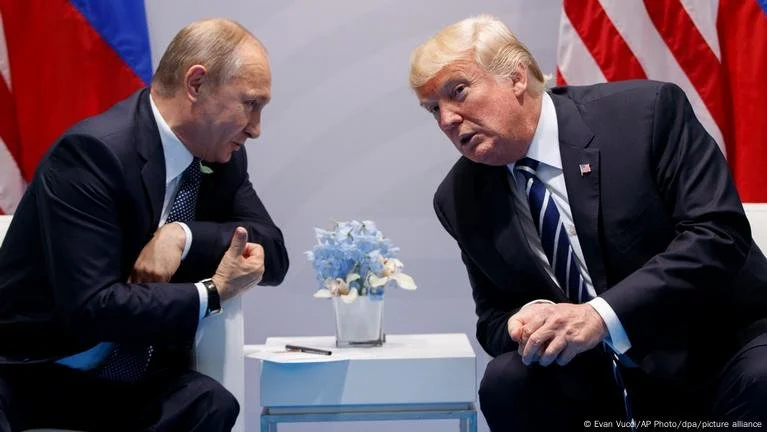
🟡 Scenario Update – CNN: White House hasn’t ruled out Zelensky…
CNN confirms the scenario BBIU forecast: the Alaska Summit will be a two-player table—Trump and Putin—while Zelensky’s role will be one of validation, not design. Europe sets red lines but lacks control over format or sequence. For South Korea, with Pyongyang openly backing Russia, any move toward strategic ambiguity carries immediate costs and leaves its security leverage firmly in Washington’s hands.
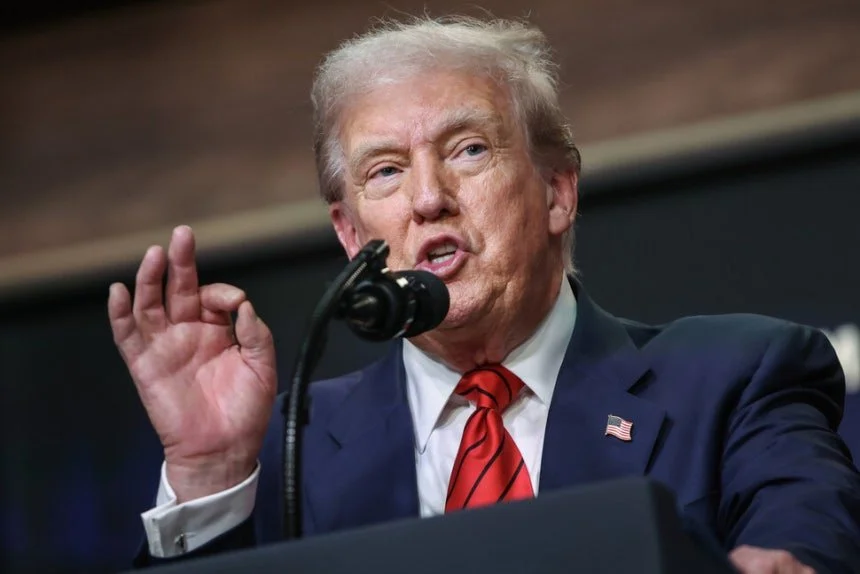
🟡 Miss Leading by Omission: The South Korean Press Narrative on U.S. Defense Demands
The Hankyoreh’s coverage of the leaked Washington Post draft is not a neutral summary but a deliberate narrowing of scope, omitting the document’s multinational context and draft status to frame U.S. pressure as an exclusively military conflict with South Korea. This media build-up, arriving just before the August 25 Trump–Lee summit, shifts public attention away from the $450 billion bilateral deal’s economic asymmetry toward a sovereignty narrative, potentially weakening Seoul’s bargaining position or, in a more deliberate scenario, laying the groundwork to provoke a rupture on terms favorable to the current administration.
![🟢 [Alaska Summit: Trump–Putin Meeting Linked to Ceasefire Proposal and Territorial Concessions in Ukraine]](https://images.squarespace-cdn.com/content/v1/685a879d969073618e9775db/1754717108981-HRZSXV0HLGFPX2MPSWB3/webp+%281%29.webp)
🟢 [Alaska Summit: Trump–Putin Meeting Linked to Ceasefire Proposal and Territorial Concessions in Ukraine]
The planned Trump–Putin summit in Alaska is more than a peace overture — it is a high-stakes strategic pivot that could redefine the post-war economic and territorial map of Eastern Europe. While framed as a ceasefire proposal, the deal under discussion involves Ukraine ceding resource-rich territories, raising profound questions about debt repayment, geopolitical precedent, and the balance of leverage between Washington and Moscow. For Trump, any agreement must deliver a tangible “win” beyond territorial swaps; for Putin, it is a bid to re-enter the global stage with minimal cost.
![🟡 [Pakistan-Based Terror Group Member Arrested in Itaewon, South Korea]](https://images.squarespace-cdn.com/content/v1/685a879d969073618e9775db/1754712470905-XMZIKZILJMV8GAK3U8JN/96444113.jpg)
🟡 [Pakistan-Based Terror Group Member Arrested in Itaewon, South Korea]
The arrest of a suspected Lashkar-e-Taiba operative in Itaewon is not just a counter-terrorism milestone — it exposes a multi-layer breach in South Korea’s security architecture. From a fictitious business visa to over a year of undetected overstay, the case reveals systemic vulnerabilities that can be exploited by extremist networks and hostile state actors alike. For LeT, Korea was likely a quiet logistics node, not a battlefield — but the route is now proven viable.
![🟡 [Census, Migration and Political Power: Structural Imbalance and Constitutional Boundaries]](https://images.squarespace-cdn.com/content/v1/685a879d969073618e9775db/1754645611400-2DIN24T77FGW2B1WWMUF/webp.webp)
🟡 [Census, Migration and Political Power: Structural Imbalance and Constitutional Boundaries]
🧠 The census must not be weaponized to erase federally induced demographic shifts.
Under the Biden administration, millions of undocumented individuals were relocated across the U.S. without public consent or local coordination.
Now, Trump proposes to exclude them from the census — a move that violates the Constitution.
BBIU proposes a structural alternative:
📌 Count everyone
📌 Differentiate with legal safeguards
📌 Govern what exists — don’t erase it.
First, you count. Then, you decide. But if the State moved the population, it must also measure it.
![🟡 [Lutnick: "US-Built Factories Will Be Exempt from 100% Semiconductor Tariff"]](https://images.squarespace-cdn.com/content/v1/685a879d969073618e9775db/1754611698993-ED5WZ3ZPO9I1XTH0K9P1/0003460682_001_20250808052946649.jpg)
🟡 [Lutnick: "US-Built Factories Will Be Exempt from 100% Semiconductor Tariff"]
In August 2025, Donald Trump unveiled the most coordinated strategic maneuver of his political career: a triad of industrial coercion, monetary pressure, and narrative control. Through forced onshoring of foreign semiconductor giants, public attacks on the Federal Reserve to expand M2, and symbolic inversion of scandals like the Epstein case, Trump is not merely governing—he is redesigning the very architecture of American power. This BBIU analysis dissects the timing, structure, and implications of a strategy that merges electioneering with systemic extraction.
![🟡 [Trump’s 100% Tariff Threat on Semiconductors Exposes Strategic Divide Between Samsung and SK Hynix]](https://images.squarespace-cdn.com/content/v1/685a879d969073618e9775db/1754542764868-G8OR7G2IWXQ2LDT35DTZ/0003921715_001_20250807101307504.jpg)
🟡 [Trump’s 100% Tariff Threat on Semiconductors Exposes Strategic Divide Between Samsung and SK Hynix]
Trump’s threat of a 100% semiconductor tariff is not a protectionist whim—it is a symbolic mechanism to reallocate Korean capital into U.S. territory. Samsung’s stock rises while Hynix falls, not due to performance, but geography. This is industrial selection through coercion. Behind the scenes, Korean conglomerates may be aligning with U.S. objectives, while President Lee is left to legitimize the operation. The tariff is not the point. The message is: “Your capital buys access—but only if it stays here.”
![🟡 [‘Big Balls’ Coristine Assaulted in D.C. – Trump Demands Adult Charges for Juvenile Attackers]](https://images.squarespace-cdn.com/content/v1/685a879d969073618e9775db/1754533179454-LGTXY2CT99UTQKU4FGFK/webp.webp)
🟡 [‘Big Balls’ Coristine Assaulted in D.C. – Trump Demands Adult Charges for Juvenile Attackers]
A brutal assault on a young Trump-era official has reignited the debate on juvenile crime, but beneath the outrage lies a deeper structural truth: today's youth violence is not merely criminal—it's symbolic. In this BBIU analysis, we dissect the collapse of initiation, the rise of false rituals, and present a transformative solution: SERP, the Symbolic Energy Restoration Protocol. More than rehabilitation, it offers lost boys a way back—through labor, structure, and earned reintegration.
![🟡 [U.S. Preliminary Decision on Korean Wire Rod: 0.51% Dumping Margin Assigned to POSCO]](https://images.squarespace-cdn.com/content/v1/685a879d969073618e9775db/1754465975633-NYN75ZRMISEXHP3O0NOH/unnamed+%281%29.jpg)
🟡 [U.S. Preliminary Decision on Korean Wire Rod: 0.51% Dumping Margin Assigned to POSCO]
As global trade shifts and clean-tech infrastructure becomes a geopolitical priority, POSCO is no longer just exporting steel — it is embedding itself into strategic U.S. supply chains. From lithium extraction in Utah to rare earths in Colorado and EV-grade steel in Louisiana, POSCO is transforming into a decentralized resource enabler. This is not diversification. It is a metamorphosis.
![🟡 [Trump Announces Upcoming Tariffs on Chips and Pharma; Markets React Cautiously]](https://images.squarespace-cdn.com/content/v1/685a879d969073618e9775db/1754455064894-G9MAZFYMD3AUCPKPIQJE/6892587be82e9.webp)
🟡 [Trump Announces Upcoming Tariffs on Chips and Pharma; Markets React Cautiously]
"President Trump’s newly announced tariffs on pharmaceuticals and semiconductors signal a deliberate shift toward industrial self-reliance. Rather than punitive in nature, these measures are part of a broader realignment of global supply chains. Affected countries, including India, Germany, Switzerland, Korea, and Taiwan, now face a strategic choice: adapt their manufacturing footprint or renegotiate access under new conditions. For allies, this moment offers both challenge and opportunity—those who retain symbolic value in the supply chain may secure long-term relevance."
![🟡 [U.S. Deploys 'Dark Eagle' in Australia: Hypersonic Dagger Before China’s Second Island Chain]](https://images.squarespace-cdn.com/content/v1/685a879d969073618e9775db/1754445770760-6AMPS2GYM68PBBQF0O8Q/0003921449_001_20250806073614169.jpg)
🟡 [U.S. Deploys 'Dark Eagle' in Australia: Hypersonic Dagger Before China’s Second Island Chain]
Hypersonic missiles like the Dark Eagle do not merely redraw the geography of power — they inaugurate a new phase of symbolic warfare, where anticipation is no longer kinetic, but cognitive. As physical defenses fail against speed, BBIU proposes an epistemic shield: detecting war before it begins, through its narrative distortions.

🟡 Lee’s ‘Vacation Diplomacy’: Preparing for Trump Golf Summit
As President Lee prepares for symbolic diplomacy with Trump, Korea's true negotiators — Samsung, Hyundai, SK On — have already realigned their futures. The government stages press conferences; the conglomerates execute industrial evacuation.
This is not a betrayal. It is a sovereign bypass.
Korea no longer negotiates — it is narrated.
The real deals are made in Texas, Georgia, and Ohio — not Seoul.
The upcoming summit is not leadership. It is consent, post-facto.
BBIU concludes: Korea has entered the post-sovereign phase of statehood.
Its chaebols are not negotiating from within — they are exiting from above.

🟡 Trump Orders Nuclear Submarines Closer to Russia After Medvedev Clash – Kremlin Remains Silent
In a dramatic escalation triggered by a social media exchange, Donald Trump announced he had ordered two U.S. nuclear submarines to move closer to Russia following remarks by former Russian President Dmitry Medvedev. While Trump escalated the rhetoric, the Kremlin remained completely silent. Russian analysts dismissed the move as a “tantrum” without real consequences. With no official response from Moscow, the episode highlights rising symbolic tension between Washington and Moscow and exposes Trump’s use of nuclear deterrence as a tool of personalized pressure.

🟡 Tax Reform Sparks Backlash Amid Market Plunge – Korean Investors Oppose Return to 10B KRW Major Shareholder Threshold
Restoring the ₩10 billion threshold is not a fiscal adjustment—it is a symbolic realignment of who the State protects and who it targets. In punishing long-term investors under the guise of equity, Korea risks hollowing out its own market just as it transfers its industrial capital abroad.
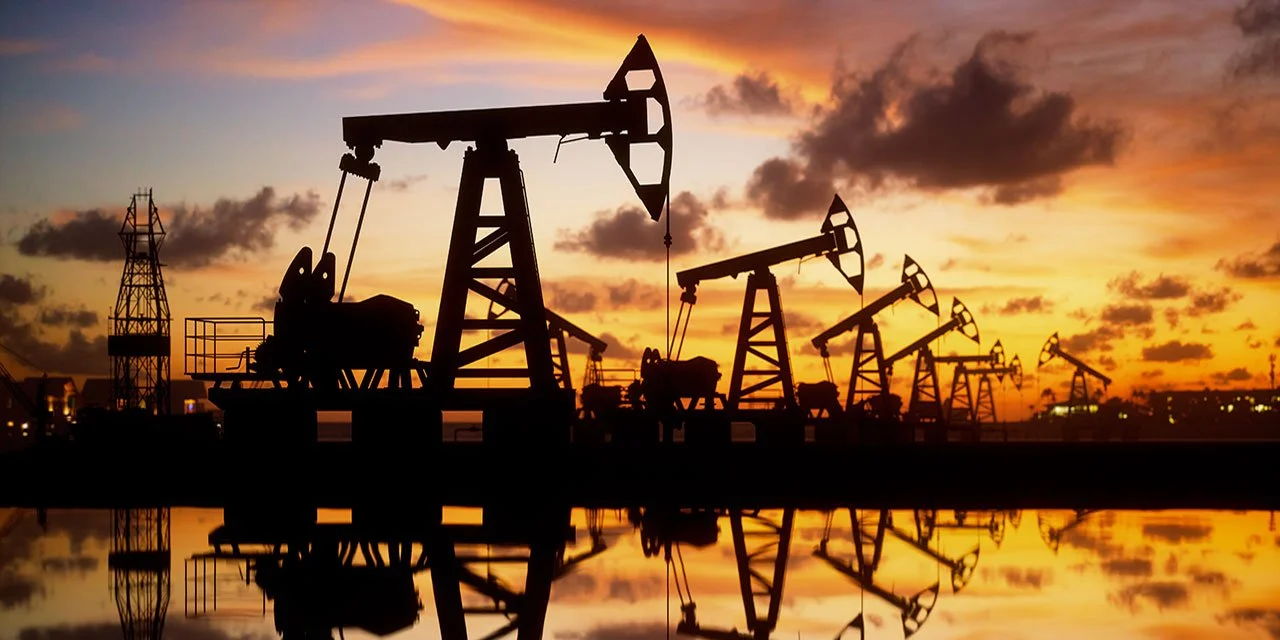
📡 The Energy Axis of Power: United States, OPEC, and the Global Geopolitical Realignment
The global rise in energy prices is not merely a market reaction — it is a structural manifestation of a deeper geopolitical alignment. The United States is no longer trading energy; it is weaponizing it. Through debt-externalizing energy contracts, financial architecture restructuring (GENIUS Act), and enforced dependency cycles, Washington is turning allies into fiscal tributaries and rivals into imploding economies. OPEC is no longer a kingmaker but a cornered vendor. And China, despite inflating M2, is signaling demand that no longer exists. This is not the return of the Cold War — it is the debut of a fiscal imperium masked as global stabilization
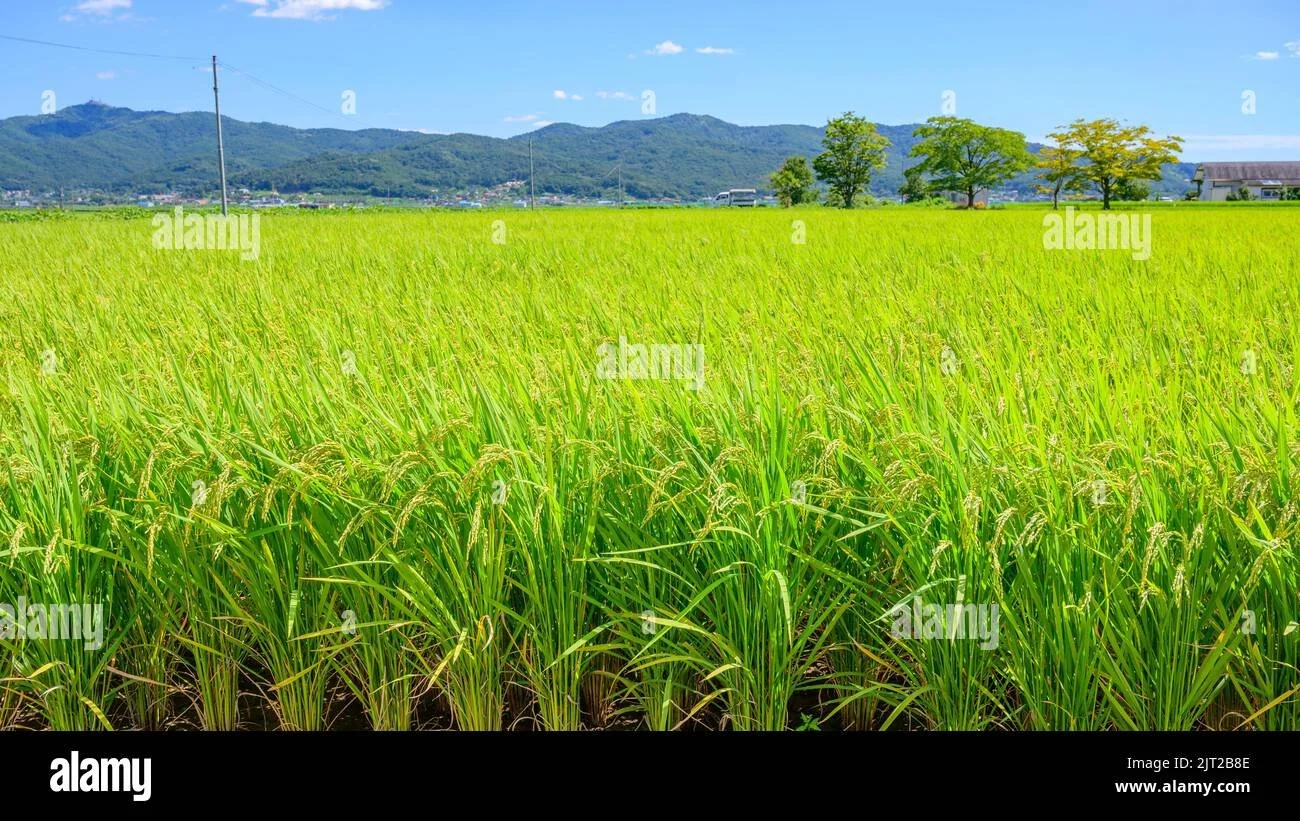
🎭 The Rice Distraction: What They’re Really Trying to Hide
Beyond agriculture, the 2025 U.S.–Korea trade pact exposes Korea to systemic risks: fiscal subordination, legal ambiguity, industrial offshoring, and loss of regulatory sovereignty. This is not trade—it is structured economic displacement.