
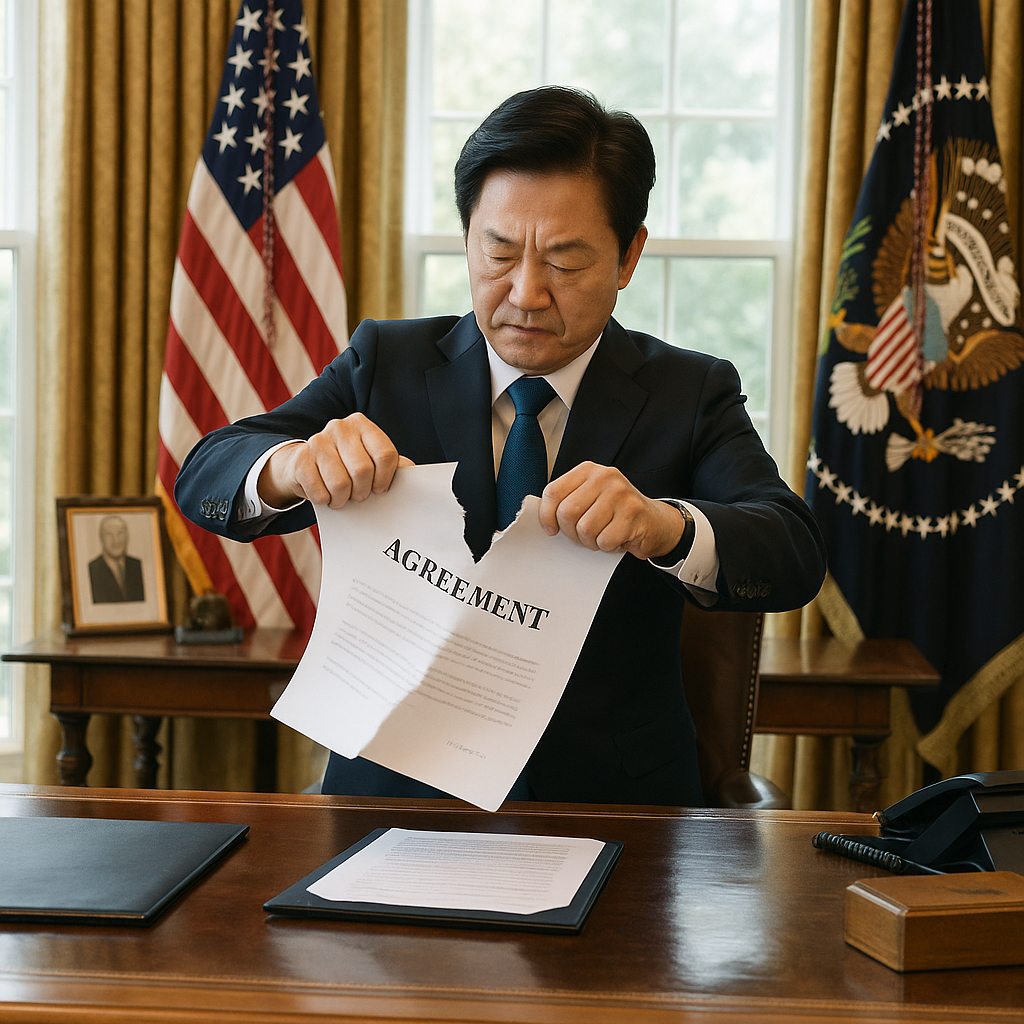
Korea’s $350B Negotiation Stalemate with the U.S.: Lee’s Silent Resistance
President Lee is not negotiating; he is stalling. His defiance plays well at home, but abroad it dissolves. Trump does not need a single strike — he can suffocate Korea layer by layer: a “review” of ESTA to humiliate, a whisper to freeze investment, an IMF report to rattle markets, tariffs kept in reserve. Each step looks technical, lawful, inevitable. For Lee, the real danger is not the $350 billion check, but the slow erosion of Korea’s status and credibility. Every day he delays, the walls close in further.
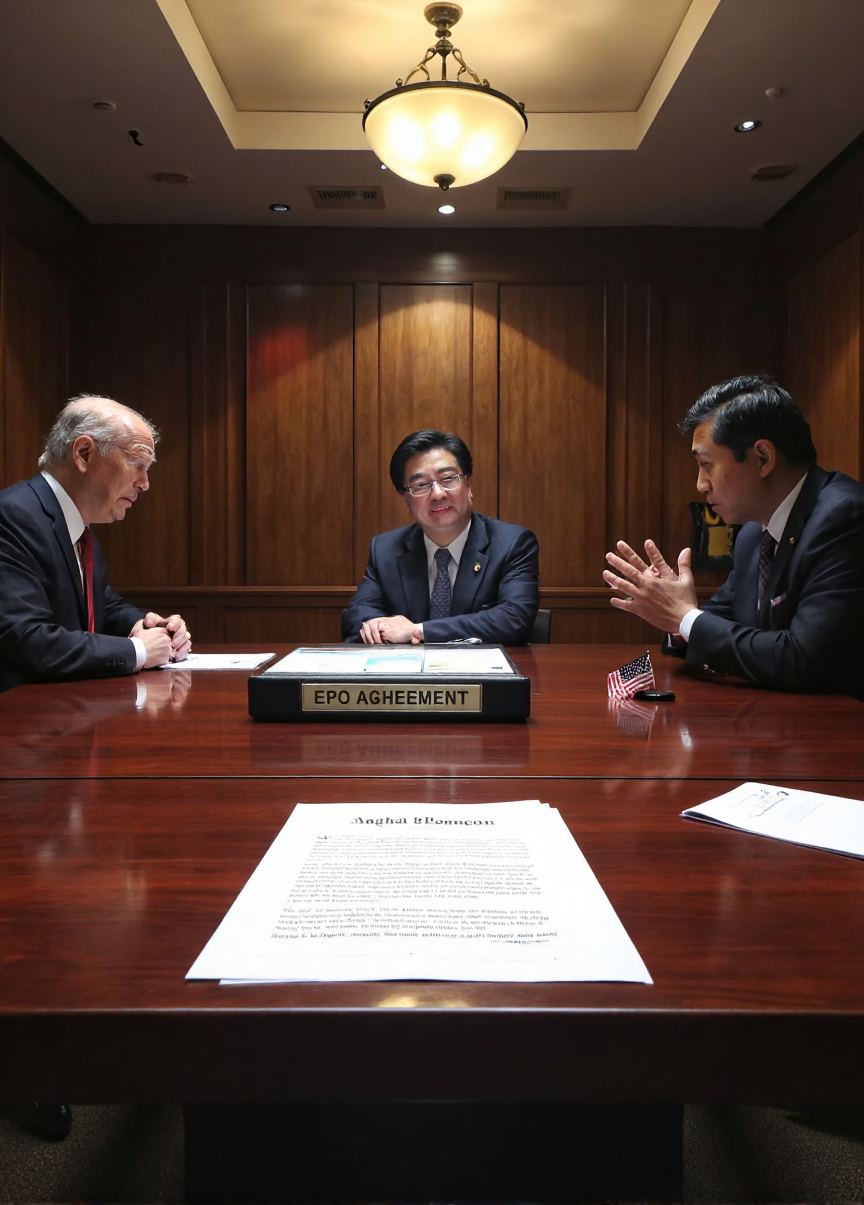
The SPC Trap: Korea’s $350B Negotiation with the U.S.
The Channel A leak on September 12 reframed the $350B U.S.–Korea trade pact not as “investment cooperation” but as financial confiscation. According to the report, Washington demanded that Seoul deposit the full sum in cash into a U.S.-controlled SPC, with all profits retained in America. While unverified by international outlets, the leak functions politically: it gives President Lee cover to resist an agreement that would drain Korea’s reserves and expose its currency to systemic fragility. As BBIU detailed in Deadlock at the Core, the forex dimension—not tariffs—is now the decisive axis.
South Korea’s Tariff Gamble: Between Post-Election Machete and Japan-Style Capitulation
The U.S.–South Korea tariff dispute has moved beyond numbers. What began as a $350B pledge in Washington now collides with the Georgia raid, reputational damage, and an ultimatum from Secretary Rutnick: sign a Japan-style MoU or face punitive tariffs. For Seoul, the choice is binary — post-election escalation or structural capitulation. In alliance politics, the word of the weak is not a promise. It is a sentence.
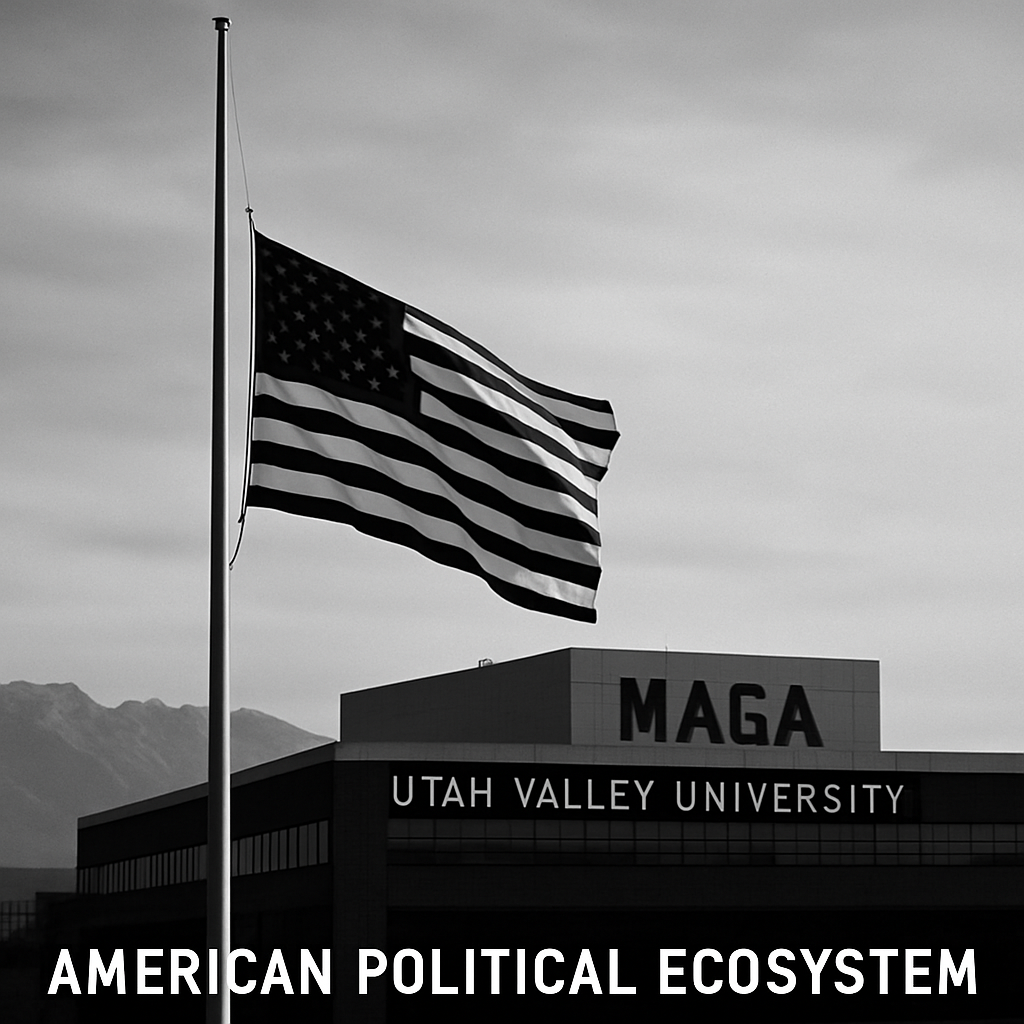
Charlie Kirk Fatally Shot During Utah Valley University Event – Political Assassination in the U.S.
The assassination of Charlie Kirk at Utah Valley University, one month before the 2025 Congressional elections, is not the act of a lone gunman but the removal of a structural node in the American political ecosystem. The precision of the shot, the vantage point, and the clean disappearance all point to professionalized action, possibly contracted.
This killing is both tactical —a demonstration of skill and planning— and symbolic —a direct strike against the youth recruitment infrastructure of Trumpism. Its timing ensures maximum electoral impact: in the short term, it galvanizes the MAGA base through martyrdom, while in the medium term it weakens Turning Point USA, creating opportunities for Democrats and rival conservatives.
The event exposes the fragility of the American civic arena: universities turned into battlefields, influencers elevated to targets, and the FBI controlling a narrative that both sides contest. Political assassination has re-entered the repertoire of U.S. power struggles, with consequences that will reverberate far beyond this election cycle.
Deadlock at the Core: South Korea–U.S. Trade Pact Stumbles Over Forex and Trump’s Warnings
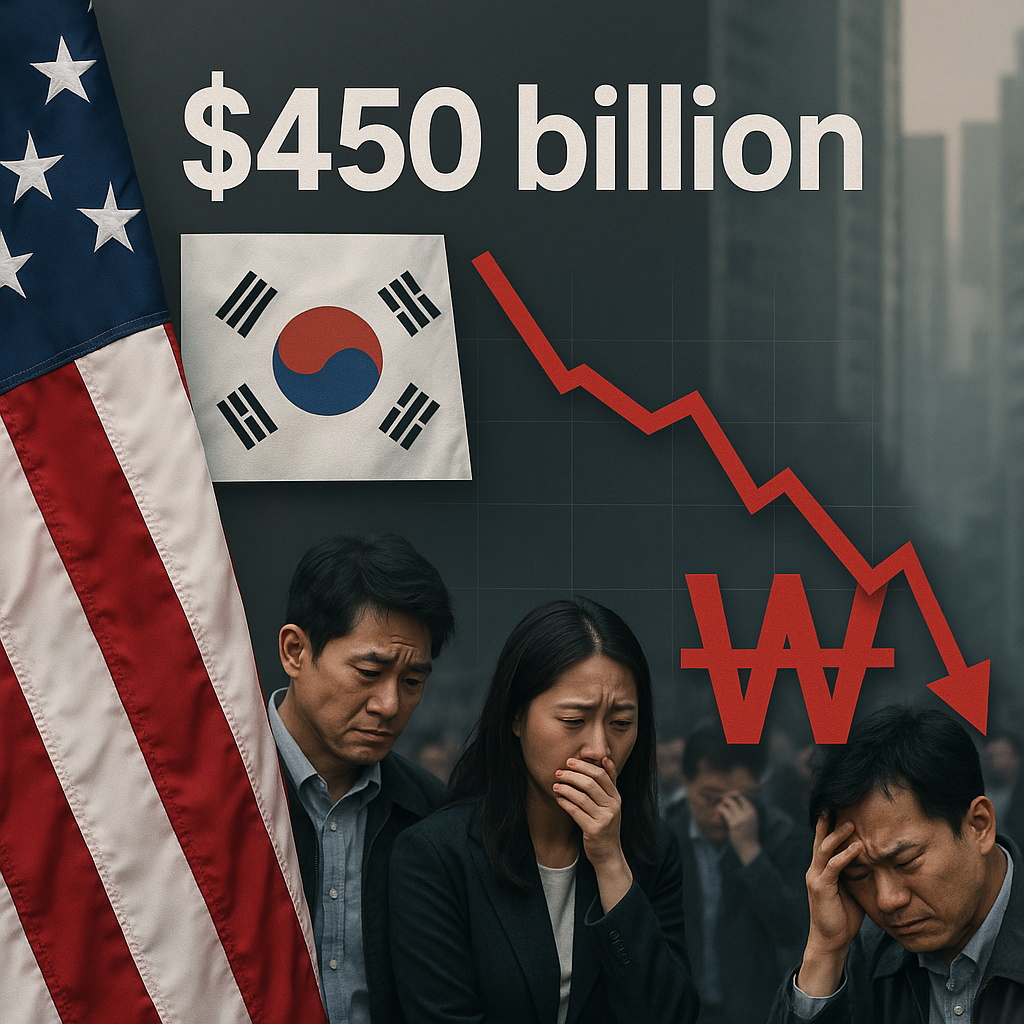
South Korea’s $350 billion investment pledge to the United States has become the central obstacle to finalizing the trade deal. With limited reserves and no swap lines in place, Seoul fears that the massive outflow could destabilize the won, already trading near ₩1,390 per dollar. Unlike Japan’s $550 billion package, backed by stronger buffers, Korea faces disproportionate risks—turning foreign exchange stability into the decisive factor for the pact’s future.
South Korea–U.S. Friction After Hyundai–LG Georgia Raid: Industrial Strategy Meets Immigration Enforcement
The September 4 raid at Hyundai–LG’s Georgia Metaplant exposed the unresolved contradiction at the core of U.S.–Korea industrial relations: billions in Korean capital are welcomed, but the skilled workers needed to operationalize these projects are shackled under immigration enforcement. What began as a law-and-order spectacle is now a structural liability, forcing Trump to balance MAGA hardliners, electoral pressure, and the urgent need to unblock stalled investments.

Immigration Raid at Hyundai–LG Energy Site in Georgia
The Hyundai–LG Georgia raid demonstrates that visa compliance is not a technicality but a decisive factor in safeguarding multibillion-dollar investments. Workers on B1/B2 or ESTA status engaged in unauthorized employment faced detention and deportation, while construction was suspended. This is part of a broader pattern: South Korea’s elevated visa denial rates, ESTA misuse, and FARA scrutiny all point to the same conclusion—U.S. law is applied with full sovereignty, and Korea’s lack of meticulous compliance repeatedly exposes its nationals, corporations, and political groups to disruption.

European Coalition and U.S. Air Backing: Postwar Security Guarantees for Ukraine
The Paris summit of September 4, 2025, signaled Europe’s formal entry into Ukraine’s postwar security architecture. Twenty-six nations pledged to form a “reassurance force” to be deployed only after a ceasefire, with France and the UK in the lead and the U.S. providing air and intelligence support. Beneath the rhetoric of unity, however, the coalition resembles a fragmented order reminiscent of the Warring States: a core of frontline nations driven by survival, a hesitant middle constrained by politics, and a periphery seeking legitimacy. The emerging framework reveals that the real foundation of Ukraine’s future lies not in brigades, but in financial transfers, industrial contracts, and the contested coherence of Western will.

Harvard vs. Trump: Federal Court Strikes Down $2.2 Billion Funding Cuts
The Harvard–Trump funding clash reveals how academic institutions can become battlegrounds when moral crises, political power, and media amplification converge. What began with a student statement after the October 7 Hamas massacre evolved into a national confrontation over academic freedom, selective oversight, and the limits of executive authority.

White House “Winning Streak” Narrative vs. Press Silence
The White House’s “Winning Streak” narrative—celebrating record tariff revenue of $158B YTD—must be read not only as domestic triumphalism but as evidence of a deeper strategy. Tariffs are no longer just fiscal inflows; they are instruments of attrition, extracting liquidity from China’s export engine while tightening its global isolation.

Beijing Victory Parade: Xi, Putin, and Kim Together After 66 Years
For the first time since 1959, Xi Jinping, Vladimir Putin, and Kim Jong Un stood together on Beijing’s Tiananmen Gate. The parade was meant to showcase China’s leadership of a united bloc, but the guest list told another story. India, Brazil, South Africa, and South Korea kept their distance, revealing how much global leaders still hedge around Donald Trump’s return. The only true winner was North Korea: from pariah to indispensable, Kim Jong Un transformed his role into that of a visible “third pole” in Eurasia. For Seoul, the optics were sobering. For Washington, they offered a ready-made negotiation map.

China Manufacturing Activity: Official Contraction vs. Private Expansion – Structural Integrity Assessment
China’s dual PMI readings mask deeper fractures: a manufacturing base caught between contraction in legacy industries and fragile resilience in high-tech niches, a fiscal system paralyzed by the collapse of land sales, and a society under rising strain from unemployment, low wages, and disillusionment. The Party’s toolkit can delay—but not resolve—structural decay.

Samsung’s Taylor Facility Back on Track: Tesla Deal, $50B Expansion Path, and the U.S. Foundry Race
Samsung’s decision to revive its long-delayed Taylor, Texas facility marks more than a production milestone. Anchored by a $16.5B Tesla deal and supported by CHIPS Act subsidies, the project signals tacit acceptance of U.S. equity-driven industrial policy. Taylor is not just a fab—it is Samsung’s entry ticket into America’s industrial core, where sovereignty, scale, and symbolism converge.

The Federal Circuit Ruling on Trump’s IEEPA Tariffs
The Federal Circuit’s ruling against Trump’s IEEPA tariffs reasserts Congress’s fiscal authority. Yet until October 14, the tariffs remain in place, creating a paradox: Mexico and Canada stand to benefit most if they fall, while South Korea faces the humiliation of concessions under duress, even as its 2026 budget fuels new risks for the won.

U.S.–South Korea Summit Ends Without Joint Statement: $350B Investment Standoff and Tariff Leverage
The Trump–Lee summit ended without a joint communiqué, exposing a structural rift: tariffs versus capital control. While Seoul sought a 15% ceiling on autos and semiconductors, Washington reframed Korea’s $350B pledge as a U.S. “National Economic Security Fund.” The absence of agreement signals not diplomacy’s failure but a shift toward industrial extraction—chaebols relocating to America, SMEs collapsing at home, and Lee’s presidency weakening under asymmetric pressure.

Massive Risk to Social Security Data from DOGE Action?
The DOGE–SSD case is not a technical mishap but a structural breach: transferring 300 million Social Security records to an unaudited cloud environment reconfigures the contract between state, data, and civil identity. Framed as efficiency, it marks the rise of data authoritarianism—where control of information becomes both leverage and systemic vulnerability.

Trump–Lee Summit: Trade Commitments, Security Dialogues, and Alliance Framework Adjustments
The August 25 summit between President Trump and President Lee Jae-myung marked a turning point in the U.S.–Korea alliance. Beyond confirming South Korea’s $450 billion economic commitments—including $150 billion for U.S. shipbuilding and $100 billion in LNG purchases—Trump introduced, for the first time, the idea of U.S. ownership of Camp Humphreys, the largest American overseas base. This shift moves the debate from financial burden-sharing to questions of sovereignty, while divergent narratives and reliance on U.S. mediation with North Korea highlight the narrowing of South Korea’s policy autonomy.

South Korea’s Energy Pledge: Structural Constraints Behind the “Mission Impossible”
South Korea’s trade pact with the U.S. lowered tariffs to 15% in exchange for $350 billion in investments and $100 billion in energy purchases. Yet, the energy pledge appears technically unfeasible: Korean refineries are optimized for Middle Eastern crude, and long-term contracts restrict substitution. OilPrice notes this “mission impossible” dynamic, framing the pledge more as a political concession than an industrial plan. For Seoul, the risk lies in committing to obligations it cannot fully meet, exposing the economy to financial drain, strategic dependency, and macroeconomic pressure.
U.S. Government Acquires 10% Equity Stake in Intel: Semi-Nationalization of Strategic Industry
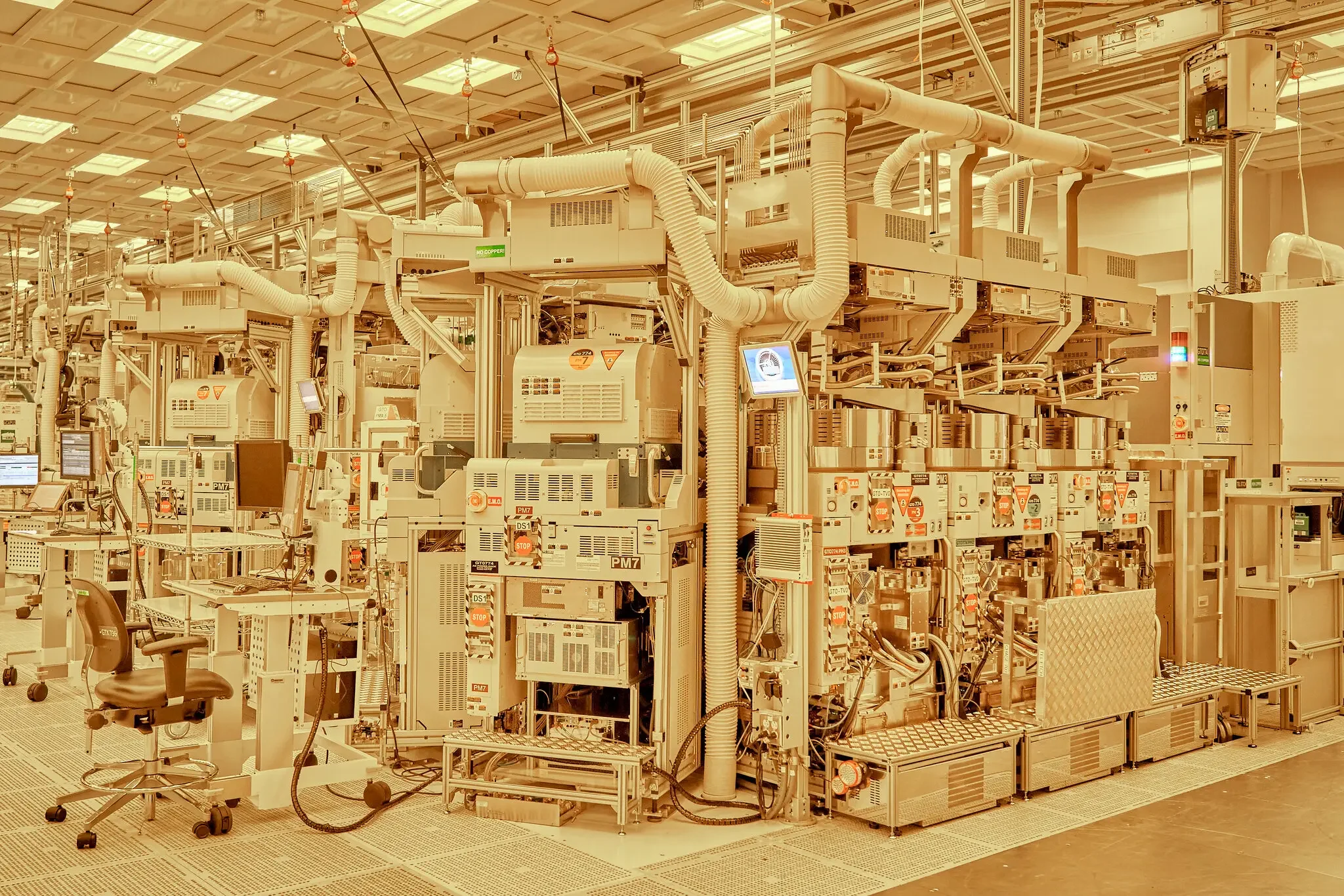
The U.S. government’s 10% equity stake in Intel marks a shift from subsidies to defensive equity—a semi-nationalization designed to shield strategic IP and deliver fiscal dividends for taxpayers. For Intel, it secures survival but risks transforming the company into a state-protected utility. For Samsung, the scenario is more complex: U.S. equity could stabilize succession and secure contracts, but at the cost of Korean sovereignty and exposure to Chinese retaliation. A full Intel–Samsung merger remains improbable, yet the axis of Intel–Samsung–U.S. Treasury now defines the emerging industrial triad reshaping global semiconductors.
NIH Research Cuts and the DEI Dilemma – Supreme Court Ruling and Structural Implications
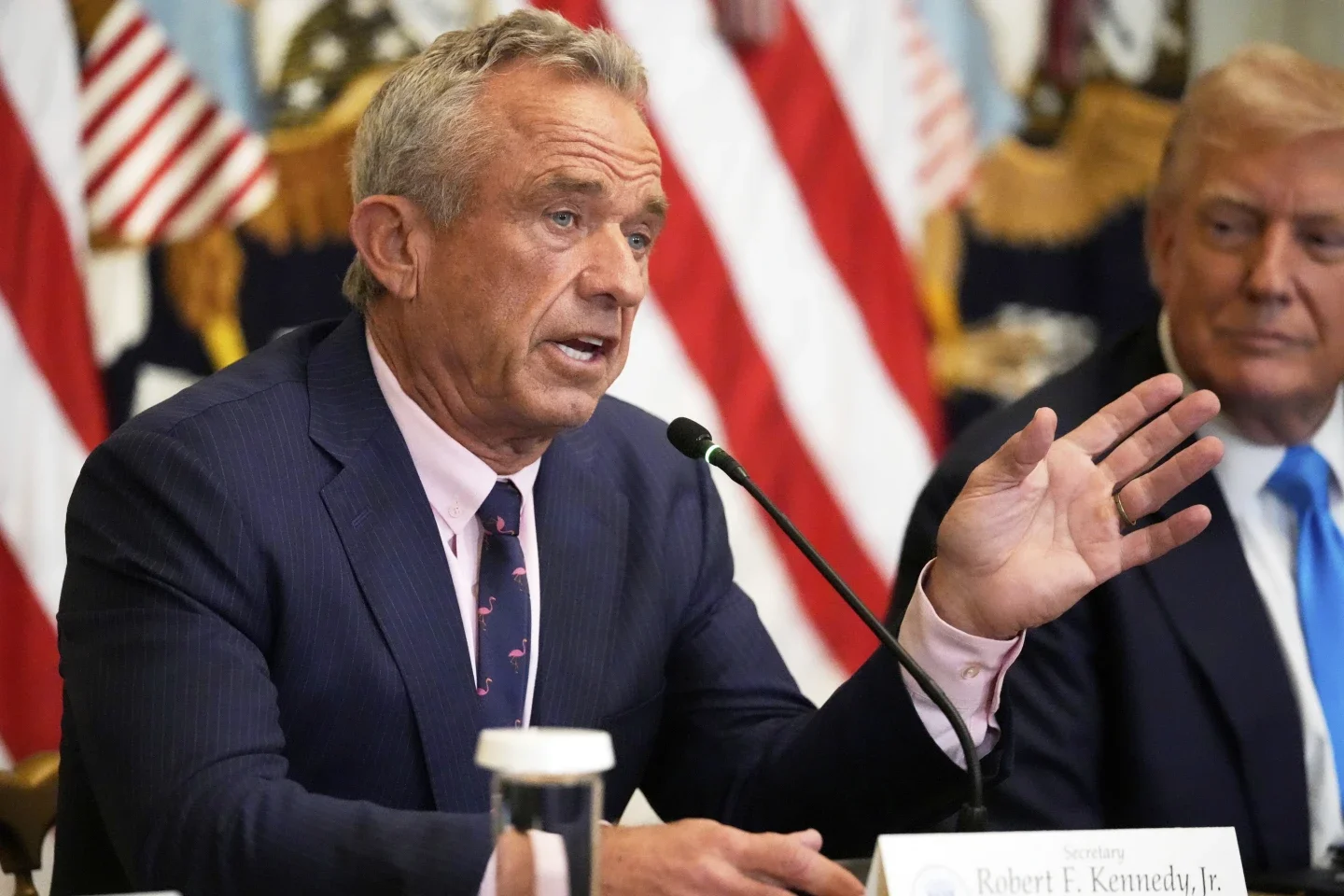
The U.S. Supreme Court’s 5–4 ruling to allow the Trump administration to cut $783 million in NIH grants linked to DEI programs is more than a budgetary shift—it is a structural rupture. What began as a noble extension of civil rights has been hollowed into a bureaucratic slogan, a political totem vulnerable to weaponization.
From HIV and cancer research in marginalized groups to mental health studies, critical projects are now reframed as “ideological spending.” The Court’s decision hands the executive wider discretion to defund science for political alignment, collapsing the epistemic contract between research and society.
BBIU further registers a dissent on DEI’s most controversial extension—pediatric sex-reassignment and hormonal interventions. To alter children’s bodies before identity formation is not equity but overreach: an irreversible act that risks lifelong harm under the guise of inclusion.
The NIH–DEI ruling is thus both symbol and signal: science reduced to partisan currency, and inclusion recast as simulation. Without transparency, accountability, and insulation from ideology, the credibility of U.S. research risks collapse.