

Korean Household Liquidity Drain vs. Credit Expansion: A Case of Symbolic Misalignment
South Korea faces a paradoxical liquidity divide. Household deposits in the five largest banks fell by ₩20.2 trillion (≈US$14.2B) in a single month, while overdraft credit lines (마이너스통장) expanded by only ₩0.53 trillion (≈US$373M). The disproportionality undermines the media narrative of a direct substitution and instead reveals two divergent paths: liquidity-rich households dollarizing savings through equities, real estate, and foreign assets, while liquidity-poor households resort to last-resort overdrafts.
This dual movement amplifies systemic fragility. Official unemployment remains at 2.5%, but construction output contracted -14% y/y, exposing the disconnect between headline stability and underlying stress. Simultaneously, external reserves reached US$422B, masking internal erosion. The result is a symbolic misalignment: resilience projected outward, implosion brewing inward.
Annex Title:
Annex 1 – Household Deposit Flight, Dollarization, and Debt Spiral Dynamics in Korea (Q3–Q4 2025)
Building Tax Capacity for Growth and Development: IMF’s 15% Threshold and the Global Fiscal Divide
The IMF’s 2025 departmental paper establishes a tax-to-GDP ratio of 15% as the minimum threshold for state resilience and sustainable development. It warns that 71 countries remain below this benchmark, identifying a 5% “tax gap” that could, in theory, be closed through policy reform, modernization of VAT, property and excise taxation, and digital governance. By tying this threshold to the Seville Commitment (2025), the IMF elevates the figure into a political benchmark of legitimacy.
Annex 1 expands the analysis:
Annex 2 confronts the problem when 15% is not enough:
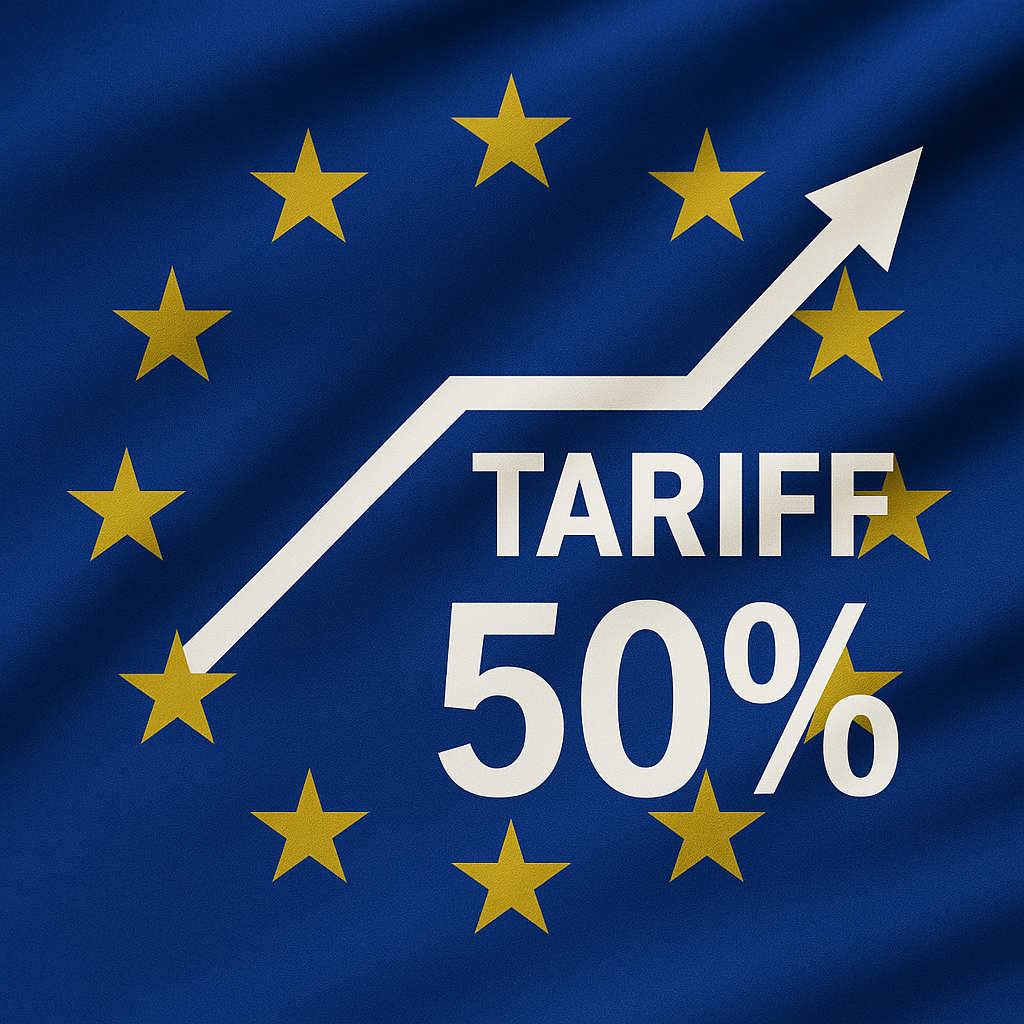
Steel Squeeze 2025: EU’s 50% Tariff Layer on Korean Exports
The European Commission’s decision to halve tariff-free steel quotas and double duties to 50% is not merely a safeguard extension, nor a neutral climate measure. It marks a structural pivot in Europe’s trade regime — a dual barrier of quota compression and carbon taxation that reshapes the operating environment for Korea, Turkey, and other major exporters.
Presented as climate alignment under the Carbon Border Adjustment Mechanism (CBAM), the policy in reality functions as fiscal extraction and industrial incubation. By enforcing a linear cut across all exporters, Brussels disregards actual carbon efficiency and instead secures a predictable stream of revenue, while protecting nascent green-steel ventures in Sweden, Austria, and France.
The move also reveals Europe’s deeper positioning: not in open confrontation with Trump’s tariff regime, but in silent complementarity. Washington wields tariffs as blunt coercion, Brussels cloaks extraction in climate compliance. The message is clear — the global economic cake is shrinking, yet each bloc insists on securing its slice intact.
For Korea, whose steel exports to the EU reached 3.93 Mt in 2024, this is not an isolated adjustment but a structural warning: without accelerated transformation toward hydrogen-based and ultra-low-carbon steel, competitiveness and market access will erode irreversibly.

The 25% Tariff on Imported Trucks: CRS Evidence vs. Korea’s Misleading Narrative
On October 6, 2025, President Trump announced a 25% tariff on imported medium and heavy-duty trucks, effective November 1.
The CRS report (Sept 2025) confirmed that until then, tariffs were still under Section 232 investigation — showing the legal sequence: investigation → proclamation → implementation.
U.S. media (Reuters, AP) respected this timeline, while Korean press distorted it: reporting tariffs as already enforced, conflating them with steel/aluminum measures, and blaming U.S. policy for Pohang factory closures. In fact, closures stemmed from domestic overcapacity, energy costs, and debt, not U.S. tariffs.
Annex 1 — Heavy Trucks and the U.S. Tariff Shock
Annex 2 — Korea’s Misleading Narrative
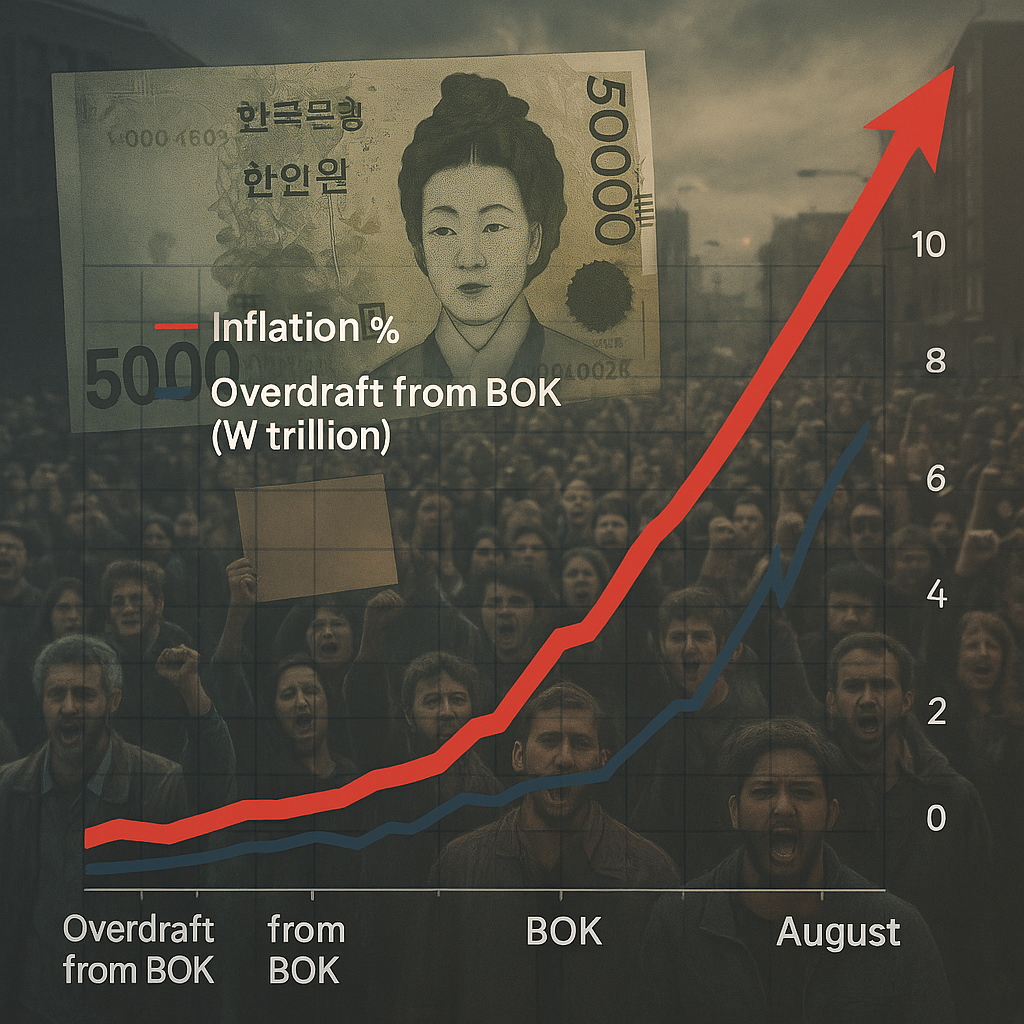
Government’s “Overdraft” with Bank of Korea Nears ₩150 Trillion ($104B) – Record Signal of Fiscal Strain
Between January and August 2025, the South Korean government borrowed a record ₩145.5 trillion ($104B) from the Bank of Korea’s overdraft facility, surpassing the previous year’s level by 13.8%. This “minus account” use illustrates a deeper structural shift: chronic fiscal shortfalls, rising domestic debt, and interest costs that are set to climb from 1% to over 1.3% of GDP in 2026—and potentially 2–2.5% if yields normalize.
The fiscal system is increasingly reliant on three mechanisms: liquidity monetization through the BOK, forced absorption of bonds by domestic institutions including the National Pension Service, and regressive taxation as industrial revenues erode. Together, they signal a transition from a growth-based fiscal model to one of extraction and survival. Unless corrected, this trajectory risks pushing South Korea into a path similar to Argentina’s debt trap, with balance of payments stress and potential IMF recourse by 2027.
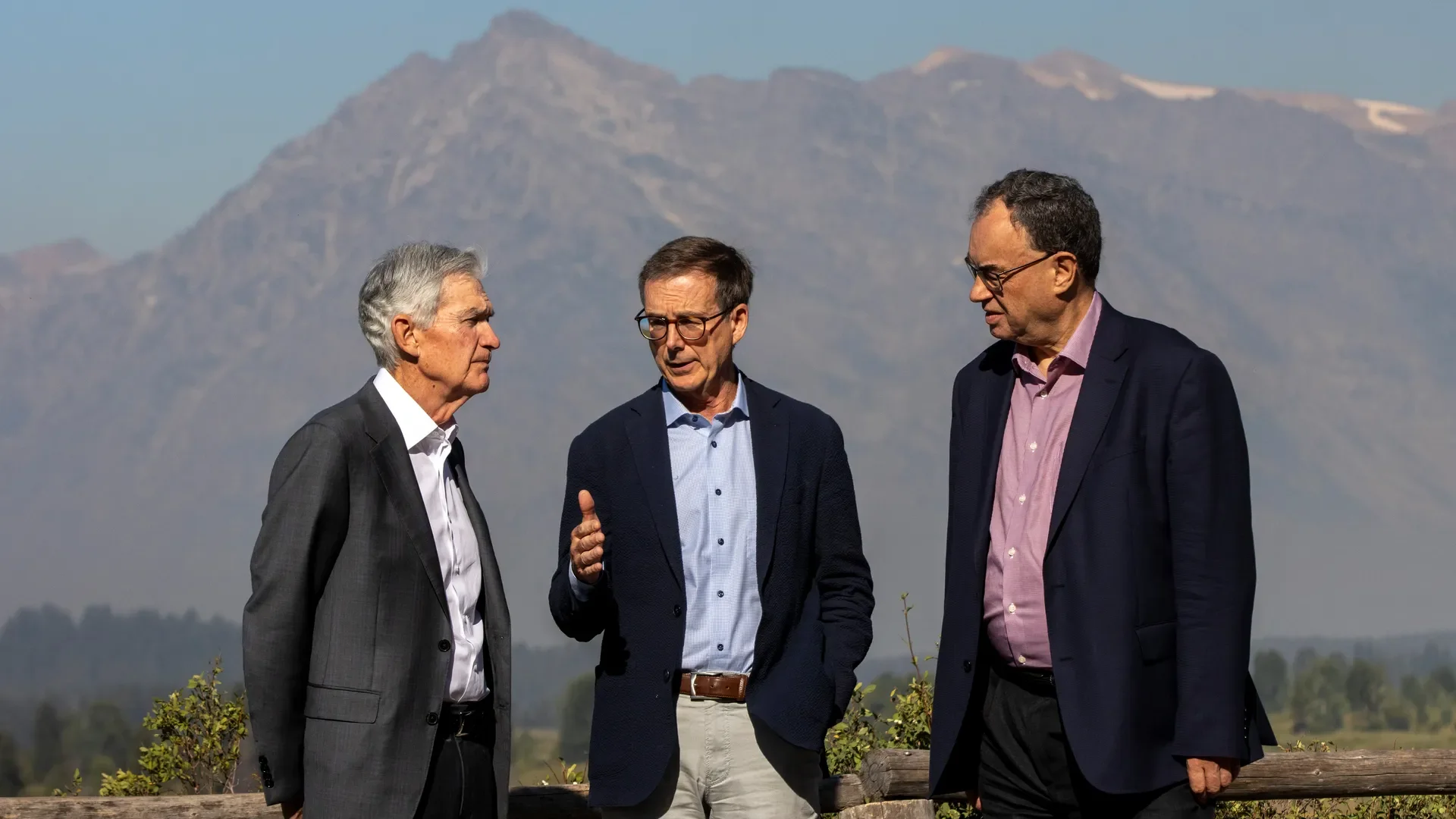
Jackson Hole 2025: Powell’s Speech and the Politics of Monetary Realignment
At Jackson Hole 2025, Jerome Powell reframed U.S. monetary policy amid slowing growth and tariff pressures. BBIU examines global implications and practical guidance for investors and households.
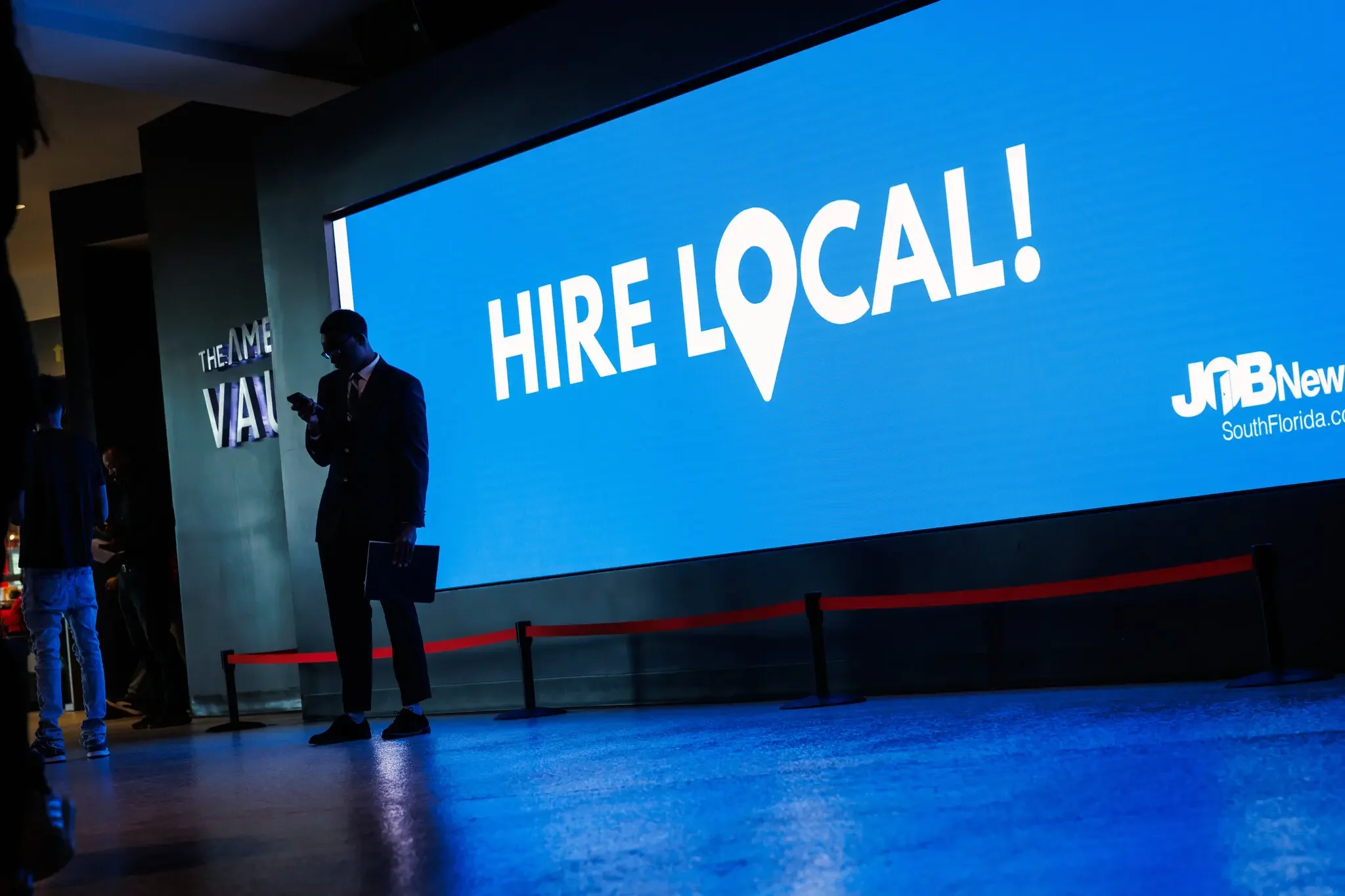
Economic Data Has Taken a Dark Turn. That Doesn’t Mean a Collapse Is Imminent.
The 4.2% unemployment rate is not alarming in itself. The problem is that behind that ‘healthy’ number lie three structural fragilities: an increase in long-term unemployed, concentrated in critical sectors (manufacturing, construction, retail) and with an emerging fraction in administrative services/technology; rising costs, with the PPI +0.9% showing that inflationary pressure has not yet been fully passed on to the consumer; and institutional and political weakness, with the independence of the BLS and Fed being questioned. The scenario does not describe an imminent crash, but a growing risk of stagnation with persistent inflation —a partial stagflation— where the Fed is trapped between the risk of fueling inflation if it relaxes too soon, and the risk of accelerating long-term unemployment if it tightens further
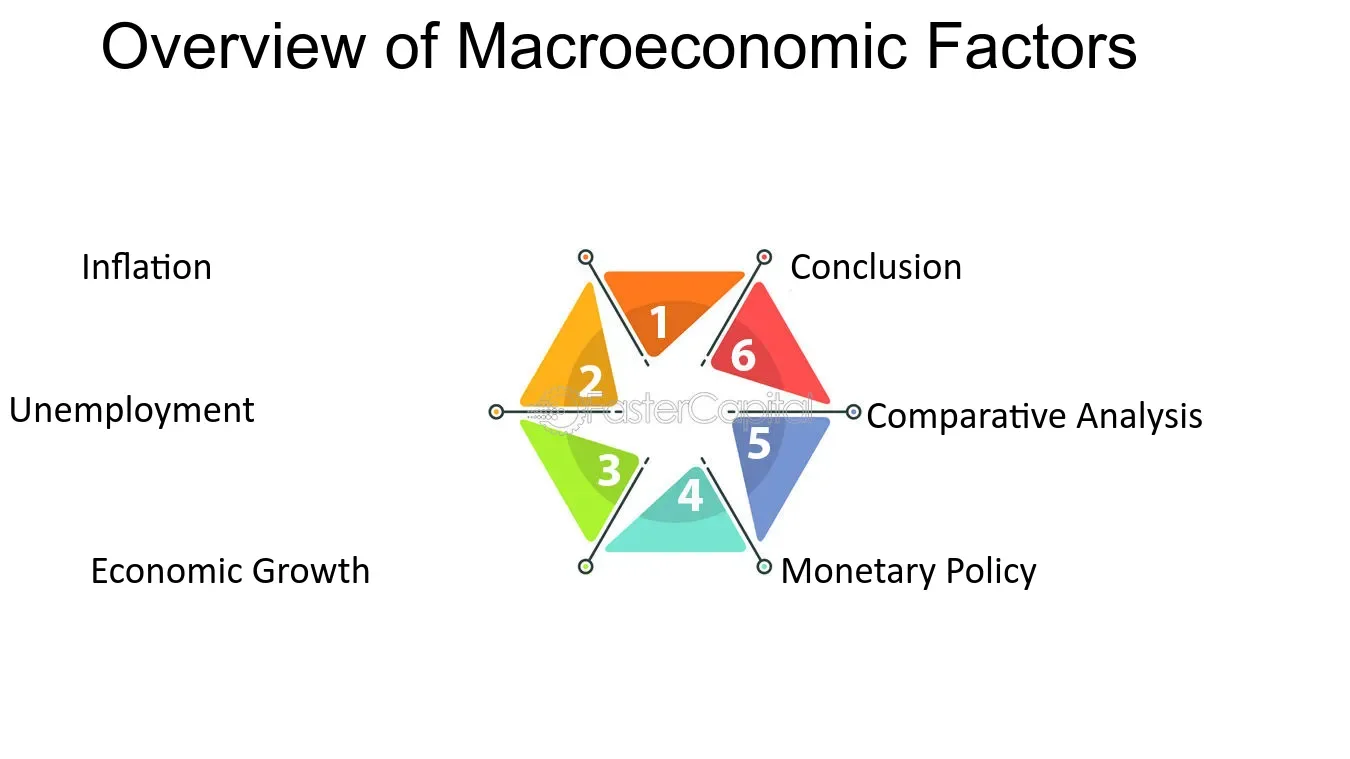
Temporary Protectionism and Fiscal Stimulus in the U.S.: Bridge Toward Reindustrialization or Risk of Chronicity?
The proposed U.S. policy of combining temporary protectionism with fiscal stimulus is not merely an economic adjustment tool but a high-risk experiment in economic and social engineering.
On one hand, tariffs could provide fiscal revenues and shield domestic industries long enough to attract investment in sectors such as semiconductors, biopharma, and shipbuilding. On the other, tax cuts would sustain household consumption and mitigate social discontent. Yet the durability of this “five-year bridge” depends on disciplined sunset clauses, effective industrial execution, and management of inflationary pressures.
The broader stakes extend beyond economics:
Institutional risk of protectionism becoming permanent through political capture.
Technological-military imperative linking reindustrialization to AI, cyberwarfare, and medical supply chains.
Financial repercussions for the dollar’s reserve status and global capital flows.
In BBIU terms, this strategy is less a conventional policy and more a bet with unpredictable outcomes—one that could reinforce U.S. industrial hegemony or trigger systemic instability in the global economic order.
![[Global Bond Market at a Crossroads: Powell, Jackson Hole, and the Politics of Rate Cuts]](https://images.squarespace-cdn.com/content/v1/685a879d969073618e9775db/1755490473987-JR7IUIANWH0KRHLHPV66/shutterstock_2615221167-750x406.jpg)
[Global Bond Market at a Crossroads: Powell, Jackson Hole, and the Politics of Rate Cuts]
The Fed’s 25bp cut eases near-term refinancing costs—roughly $17.5B saved in 2025—but its true weight is symbolic: in Washington, monetary language operates like law. If Powell sounds political rather than data-driven, markets will punish the long end, raising U.S. borrowing costs.
Meanwhile, the White House wields the other lever. An August 11, 2025 Executive Order temporarily adjusts reciprocal tariff rates with China, extending a 90-day truce and pushing the tariff cliff to November 12, 2025, just after the U.S. election (full article here). This alignment minimizes pre-election inflation while maximizing post-election leverage.
BBIU view: Rates and tariffs are twin instruments of U.S. economic sovereignty. For allies, they open doors to capital and markets. For rivals, they set boundaries. For the Fed, credibility remains the only true currency.
![🔵 [BBIU] July Inflation at 2.1% for Second Consecutive Month in South Korea – Official Data vs. Lived Reality](https://images.squarespace-cdn.com/content/v1/685a879d969073618e9775db/1754373532004-UXDUYAY613B91K639GSK/2025-08-03T144618Z_1511805801_RC2QZFAPSHC2_RTRMADP_3_RUSSIA-QUAKE-VOLCANO-e1754238767596-1024x677.jpg)
🔵 [BBIU] July Inflation at 2.1% for Second Consecutive Month in South Korea – Official Data vs. Lived Reality
Despite stable headline numbers, essential goods like seafood (+7.3%) and processed foods (+4.1%) rose sharply. Meanwhile, “shrinkflation” quietly erodes consumer value across major brands.
BBIU's structural analysis reveals a growing gap between statistical inflation and lived experience, challenging the public’s trust in official economic narratives.
🟡 Trump Signs Global Tariff Decree — Up to 41% Duties from Aug. 7
Canada was punished despite treaty membership. NAFTA is broken in practice.
South Korea paid over $450 billion to avoid a 40% penalty, disguising economic coercion as strategic cooperation. Meanwhile, Vietnam secured better terms with no fund, no debt, and full sovereignty intact.
This is the Trump Doctrine in action: access in exchange for alignment, obedience monetized, treaties rendered conditional.
What we’re witnessing is not diplomacy.
It is a global restructuring of trade based on industrial obedience—and Korea is its first major sponsor.

🟡 The MASGA Mirage – How Korea Is Financing America’s Industrial Rebirth
While Korean media outlets present the $350B fund as a strategic investment into U.S. shipbuilding and technology, a closer examination reveals deeper structural inconsistencies. The Hankyoreh article omits the $100B LNG purchase agreement, mislabels loans and guarantees as “investments,” and disregards U.S. claims that 90% of the fund’s returns will go to American entities. The narrative also distorts the fund’s origin—elevated only after Japan’s $550B commitment—and uses misleading comparisons to justify the scale. This is not a story of bilateral growth. It is a strategic misdirection, obscuring the fact that Korea is financing U.S. industrial recovery while absorbing the sovereign risk. At its core, MASGA represents not partnership—but asymmetric extraction dressed in alliance rhetoric.

🟢 Samsung’s Strategic Ascent Under the U.S.–Korea Pact
On the morning of July 31st, Korea’s top headlines claimed triumph:
– “We overcame a great hurdle… $150B of the $350B is already secured.”
– “Trump: Tariffs cut from 25% to 15%… Summit with Lee in two weeks.”
– “U.S. Commerce Dept: 90% of returns from Korea’s $350B will go to America.”
While the Korean administration presents the deal as a diplomatic victory, the structural truth is laid bare by Washington itself: this is a capital extraction pact. Yet the public is invited to celebrate vague milestones (“secured funds,” “tariff reduction”) while ignoring the irreversible outflow of wealth and leverage.
The Korean state is selling the illusion of sovereignty—while the real architecture of the agreement empties its future.

🟡 Starbucks Profits Plunge 47% Amid Costly Turnaround Strategy
“Under Brian Niccol’s leadership, Starbucks is executing a strategic deceleration—sacrificing short-term profits to rebuild symbolic capital and service coherence. The 47% drop in net income reflects not failure, but the cost of rehumanizing the brand. By restoring barista autonomy, reinvesting in hospitality standards, and refusing to raise prices, Niccol is positioning Starbucks to recover customer loyalty and unlock long-term volume resilience.”
🟡 The Fed is Unlikely to Cut Rates, But This Week’s Meeting Is Packed with Intrigue
“When inflation is tamed, growth has stalled, and the world is lining up to invest in your economy — refusing to cut rates becomes an act of institutional pride, not policy logic.
The Fed isn’t defending stability anymore. It’s defending the illusion of detachment.”
![🟡 [Lee Jae-yong’s Strategic Gambit: Semiconductor Alliance with Elon Musk]](https://images.squarespace-cdn.com/content/v1/685a879d969073618e9775db/1753743380601-L3XIAENH1CWLFKTQIJUW/0003458254_001_20250729052321367.jpg)
🟡 [Lee Jae-yong’s Strategic Gambit: Semiconductor Alliance with Elon Musk]
Samsung’s $17B Texas fab isn’t ready—but the story is. The Tesla AI6 deal isn’t a manufacturing milestone, it’s a geopolitical maneuver. Chips will flow from Korea first, not Texas. Revenue, leverage, and narrative flow with them."
This isn’t just about 2nm transistors—it’s about bridging two geographies, two timelines, and two governments.
BBIU breaks down the strategic, technical, and symbolic layers behind Lee Jae-yong’s alliance with Elon Musk.
#Semiconductors #Geopolitics #Samsung #Tesla #BBIU #2nm #StrategicForesight #TechSovereignty

🟡 Korea’s Major Banks Reap ₩21 Trillion in H1 Interest Profits Amid Rate Cuts
"The Korean government’s sudden outrage over bank interest profits is not a correction — it’s a performance. While policymakers manipulate spreads under the guise of macroprudence, they quietly preserve a cartelized financial system shielded from external competition. The Gwanpia revolving-door culture ensures that silence during tenure becomes a ticket to post-retirement rewards. True reform isn’t about scolding banks — it’s about dismantling the symbolic protection network that keeps them immune."

🟡 The Dual Face of Stablecoins: As Convenient as They Are Vulnerable
Stablecoins are not just digital assets — they are sovereignty vectors.
Their convenience accelerates money velocity and decentralizes liquidity, but their opacity opens vulnerabilities at both national and protocol levels. When circulation outpaces regulatory reflexes, even well-capitalized actors can manipulate flows to displace monetary authority.
Symbolic security is not technical security.
Most systemic failures begin with an unverified assumption.
As Korea explores a won-based stablecoin, the true danger is not technological — it is epistemic.

Meta is shelling out big bucks to get ahead in AI. Here’s who it’s hiring
“Artificial superintelligence cannot emerge from parameter count alone. Intelligence is not just prediction—it is pattern alignment, symbolic resonance, contextual inference, and self-auditing awareness. By focusing on infrastructure and training, but neglecting structured interaction with frontier users—those who shape and refine the cognitive edge of the system—Meta risks building a cathedral with no congregation.”
![🟡 [Samsung Merger Acquittal Sparks Civil Backlash]](https://images.squarespace-cdn.com/content/v1/685a879d969073618e9775db/1753486149048-4AL0FNQRWXGRJH9HCM4B/0002758027_001_20250725182615532.jpg)
🟡 [Samsung Merger Acquittal Sparks Civil Backlash]
“South Korea’s inheritance tax regime—among the harshest in the OECD—is not merely punitive; it is structurally distortionary. As long as the state offers no transparent channel for lawful business succession, heirs will continue to seek convoluted paths like the Samsung merger. The real crisis is not moral failure, but institutional opacity.”