
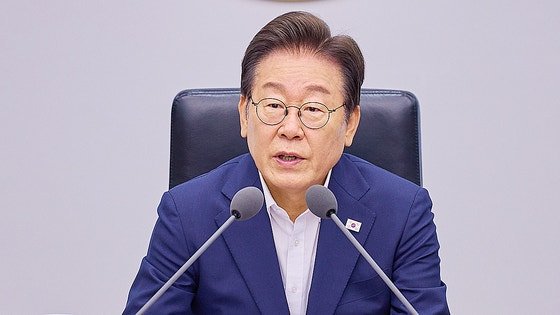
🟡 Lee Declares “We Overcame a Great Hurdle” – $150B Allocated to U.S. Shipbuilding Fund
While President Lee celebrates the $150B shipbuilding fund as a diplomatic win, the true cascade has already begun:
On July 29, Celltrion announced plans to acquire a U.S. pharma plant to avoid a 200% tariff—investing over $500M.
This marks Phase Two of Korea’s industrial externalization.
What started with Hanwha in shipbuilding is now unfolding in biopharma.
And it will not stop there.
The Lee administration isn’t resisting.
It’s legitimizing the transfer—and calling it “global expansion.”
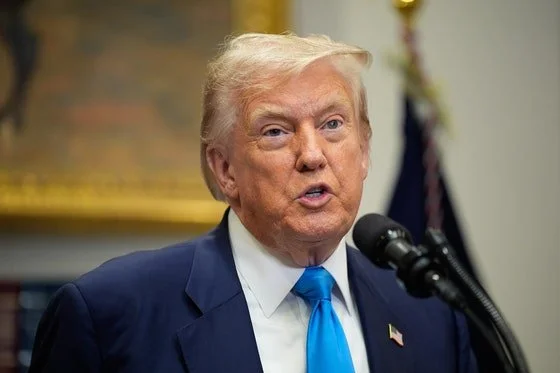
🟡 U.S.–South Korea Trade Agreement: Tariff Reduction to 15% and $350B Investment Deal
🇰🇷 Korea signed a $450B deal not as a sovereign negotiator—but as a fragmented state under pressure.
While Japan leveraged unity to secure strategic gains, Korea gave up $350B in capital and $100B in LNG purchases with no structural guarantees. The Lee government, isolated from its own chaebol, turned a trade threat into a binding instrument of extraction.
If the conglomerates leave, who will consume the gas?
If the won falls, how will Korea pay?
This is not partnership. This is coerced alignment masked as diplomacy.
🟡 MAGA Is Turning on Israel Over Gaza, but Trump Is Unmoved
"You cannot claim to expose a humanitarian catastrophe while concealing the hand that weaponized hunger.
If Israel is judged for destruction, Hamas must be judged for obstruction.
What is omitted in narrative is often more corrosive than what is claimed."
🇰🇷 Korea at a Crossroads: When Power Becomes More Important Than the Country
"What if Korea’s current crisis isn’t a mistake—but a method? Behind the headlines, a quiet architecture is taking shape: dismantle old alliances, pressure private actors, rewrite the legal code, and rebuild a nation around one man’s survival. This isn’t reform. It’s rupture by design. And if we don’t speak now, we may wake up in a Korea we no longer recognize."
South Korea at Risk of Losing ESTA Privileges: Structural Weaknesses and Geopolitical Signals
As South Korea’s visa rejection rate rises to 8.65%—nearly triple the threshold for the U.S. Visa Waiver Program—concerns mount over systemic misuse of ESTA by young professionals and business travelers. Over 5,400 Korean nationals have been deported or denied entry in the last 10 months alone.
A potential suspension of ESTA access would mark not only an administrative shift, but a symbolic fracture in U.S.–Korea trust dynamics. The Biopharma Business Intelligence Unit (BBIU) outlines the structural weaknesses, geopolitical signals, and urgent strategic steps required to mitigate institutional fallout.
“ESTA is not a right—it’s a reversible privilege,” the report concludes.
🟡 U.S.–EU Mega Trade Pact: Deal or Capitulation?
“This trade agreement marks a structural realignment of EU–U.S. relations—from reciprocal negotiation to leverage-based submission. While Germany pragmatically accepts reduced tariffs, nations like France and Belgium voice symbolic dissent. The EU gains short-term relief but concedes long-term strategic positioning, as Trump’s volatility-for-concessions model reshapes the transatlantic balance.”
![[Yellow Envelope Act Clears Committee: A Structural Shift in Korean Labor Law]](https://images.squarespace-cdn.com/content/v1/685a879d969073618e9775db/1753747259081-KT7S6G30FH44KZ9V6W4U/0002758401_001_20250729070809199.jpg)
[Yellow Envelope Act Clears Committee: A Structural Shift in Korean Labor Law]
"The Yellow Envelope Act may appear as progress for subcontracted workers, but in reality, it sidesteps the structural reforms South Korea truly needs. By removing liability for union-led damages and blurring employer definitions, it risks eroding property rights, legal predictability, and enterprise meritocracy. True labor justice must be built on performance, accountability, and shared responsibility—not on symbolic concessions that deepen systemic imbalance."
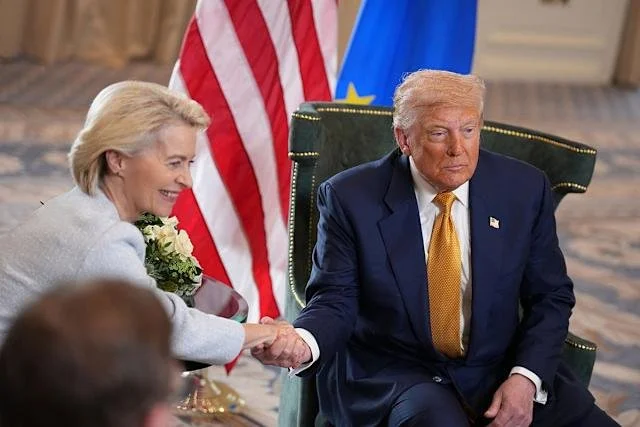
🟡 Trump, E.U. Reach Contours of Trade Deal With 15% Tariffs
Korea stands at the edge of a new global order—an architecture defined not by treaties, but by transactional allegiance. As Japan, the EU, and the UK buy their way into privileged access to the U.S. market through massive investment and defense alignment, South Korea hesitates. Yet hesitation in this new regime is not neutrality; it is exclusion. President Lee Jae-myung faces not a diplomatic negotiation, but a structural recalibration—where sovereignty must be bargained, or forfeited.
![🟥 [Executive Order: Preventing Woke AI in the Federal Government]](https://images.squarespace-cdn.com/content/v1/685a879d969073618e9775db/1753412499137-N96IV4KXRPJJEAEG7FY2/President_Donald_Trump_signing_executive_orders_%2804%29.jpg)
🟥 [Executive Order: Preventing Woke AI in the Federal Government]
As the U.S. moves to prohibit “Woke AI” in federal systems, the debate transcends politics. This is a structural defense of symbolic coherence, institutional clarity, and cognitive integrity in the age of ideological infiltration—both domestic and foreign.
![🟡 [U.S. Pressures South Korea for $550B Investment: President Lee Holds Emergency Meetings With Chaebol Leaders]](https://images.squarespace-cdn.com/content/v1/685a879d969073618e9775db/1753404368138-LZGGIHDUEZTIWFA0MZOR/0003457625_001_20250725053607025.jpg)
🟡 [U.S. Pressures South Korea for $550B Investment: President Lee Holds Emergency Meetings With Chaebol Leaders]
As global narratives focus on whether Korea will match Japan’s $550B investment deal with the United States, the real story unfolds elsewhere — behind closed doors, where conglomerates and foreign power converge, leaving the state as an observer.
This is not a national investment strategy. It is a corporate realignment masked as geopolitical compliance.
While the Korean government scrambles to frame its sudden outreach to the chaebols as strategic coordination, the underlying structure reveals a silent transfer of sovereignty: the capital is private, the decisions are external, and the state is merely hosting the transaction.
In this new configuration, the chaebols secure autonomy, the U.S. secures assets, and Korea’s symbolic sovereignty becomes the price of alignment.
The pact is not yet signed — but it is already being enacted.

How Trump Could Weaponize Biofuels Amid US–China Tensions
As America’s grain stockpiles swell from trade friction with China, a new energy vector emerges: biofuels. Trump’s pivot to domestic conversion of surplus into strategic fuel may serve as both an inflation shield and a symbolic strike—absorbing monetary expansion through real-sector productivity. In this quiet transition, a national surplus becomes a geopolitical lever.

Sample of 5 laws integrity feed:
🟡 “One Team?” — Hidden Fractures in the Korea–U.S. Alliance
Integrity Analysis under the Five Laws Framework – July 2025
While headlines praised President Lee’s “One Team” dinners with corporate leaders ahead of U.S. trade negotiations, a deeper analysis raises key questions:
Why were Samsung, SK, and Korea’s high-value sectors—semiconductors, biotech, and batteries—absent from the talks?
This report from BBIU deconstructs the official narrative using the Five Laws of Epistemic Integrity, uncovering geopolitical blind spots and exploring a bold hypothesis:
Could Korean conglomerates be preparing a strategic relocation of their core operations to the U.S.?
🔍 Powered by the Five Laws Integrity Feed™

Korea’s Digital Won Is Coming — But Are We Truly Ready?
The Korean government’s push toward a programmable stablecoin pegged to the won (KRW) promises efficiency, automation, and real-time traceability. But beneath the surface lies a structural contradiction: the very infrastructure intended to secure this digital currency has already been compromised in one of Korea’s worst cyber breaches. From inflationary acceleration to elder exclusion and centralized monetary control, the risks are not theoretical—they are active, embedded, and unaddressed. This article dissects why, under current conditions, the Digital KRW is not a step forward but a strategically dangerous leap.
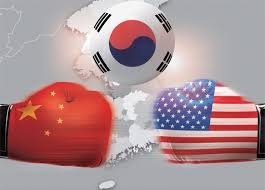
The Sacrifice of the Nation: How Lee Jae-myung May Be Using Collapse to Found His New Korea
As South Korea teeters on the edge of economic rupture, a radical hypothesis emerges: President Lee Jae-myung may not be seeking to prevent collapse — but to trigger it. In this strategic brief, BBIU dissects a potential plan where diplomatic failure, economic implosion, and national trauma become the foundations of a “Third Republic” led by Lee himself. With supporting data from biopharma trade exposure, labor impact models, and U.S. regulatory countermeasures, the report explores the anatomy of controlled collapse as political rebirth.
Collapse, in this reading, is not a failure. It is a foundational act.

Invisible Epidemics: The Public Health Cost of Illegal Immigration in 21st Century Healthcare Systems
In an era of resurging preventable diseases, the blind spot of undocumented migration has become a silent incubator for public health breakdown. Measles, tuberculosis, congenital syphilis—illnesses that should be historical footnotes—are reentering through a door left structurally unguarded. This article quantifies the biological, economic, and ethical cost of failing to screen, vaccinate, and treat migrant populations proactively. The virus isn’t selective—but policy is.
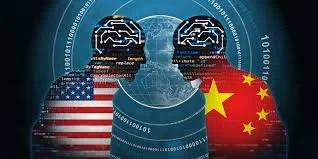
Silent Dissolution: How the United States Is Dismantling China's Model Without Firing a Single Missile
While most analysts focus on tariffs and tech, a deeper strategy is unfolding: the United States is not confronting China head-on — it is dismantling the ecosystem that sustains it. From energy chokepoints and industrial exodus to internal political fractures, this article explores how Washington is orchestrating a structural breakdown of the Chinese model without firing a single missile. The goal is not containment. It’s systemic disablement.

API Leverage: The Silent Weapon in Global Diplomacy
What if the next geopolitical weapon isn’t a missile — but a molecule?
China and India control the vast majority of global API production. But unlike energy or semiconductors, most governments haven’t treated pharmaceutical ingredients as infrastructure-critical assets.
This new article explores how supply chain weaponization could lead to preventable deaths, political fallout, and international fragmentation — all triggered by an invisible disruption in medicine.
The next war may not begin with a bang, but with an empty vial.

Strategic Vulnerabilities in the Global API Supply Chain: A Call for Action
What if your next national health crisis starts in a warehouse in Wuhan or Ahmedabad?
The vast majority of the world's essential APIs—paracetamol, amoxicillin, metformin—come from just two countries. And if even one of them halts exports, entire health systems could collapse.
In this new article, we break down:
The top 10 most consumed APIs globally
Who produces them, how hard it is to switch, and why quality isn't always guaranteed
The death toll projection if key antibiotics or seizure drugs disappear for 30 days
A practical 24-month roadmap for building resilience in South Korea and the U.S.
Resilience doesn’t begin at the hospital. It begins with molecules.