

Beijing Victory Parade: Xi, Putin, and Kim Together After 66 Years
For the first time since 1959, Xi Jinping, Vladimir Putin, and Kim Jong Un stood together on Beijing’s Tiananmen Gate. The parade was meant to showcase China’s leadership of a united bloc, but the guest list told another story. India, Brazil, South Africa, and South Korea kept their distance, revealing how much global leaders still hedge around Donald Trump’s return. The only true winner was North Korea: from pariah to indispensable, Kim Jong Un transformed his role into that of a visible “third pole” in Eurasia. For Seoul, the optics were sobering. For Washington, they offered a ready-made negotiation map.

China Manufacturing Activity: Official Contraction vs. Private Expansion – Structural Integrity Assessment
China’s dual PMI readings mask deeper fractures: a manufacturing base caught between contraction in legacy industries and fragile resilience in high-tech niches, a fiscal system paralyzed by the collapse of land sales, and a society under rising strain from unemployment, low wages, and disillusionment. The Party’s toolkit can delay—but not resolve—structural decay.

Samsung’s Taylor Facility Back on Track: Tesla Deal, $50B Expansion Path, and the U.S. Foundry Race
Samsung’s decision to revive its long-delayed Taylor, Texas facility marks more than a production milestone. Anchored by a $16.5B Tesla deal and supported by CHIPS Act subsidies, the project signals tacit acceptance of U.S. equity-driven industrial policy. Taylor is not just a fab—it is Samsung’s entry ticket into America’s industrial core, where sovereignty, scale, and symbolism converge.

The Federal Circuit Ruling on Trump’s IEEPA Tariffs
The Federal Circuit’s ruling against Trump’s IEEPA tariffs reasserts Congress’s fiscal authority. Yet until October 14, the tariffs remain in place, creating a paradox: Mexico and Canada stand to benefit most if they fall, while South Korea faces the humiliation of concessions under duress, even as its 2026 budget fuels new risks for the won.

U.S.–South Korea Summit Ends Without Joint Statement: $350B Investment Standoff and Tariff Leverage
The Trump–Lee summit ended without a joint communiqué, exposing a structural rift: tariffs versus capital control. While Seoul sought a 15% ceiling on autos and semiconductors, Washington reframed Korea’s $350B pledge as a U.S. “National Economic Security Fund.” The absence of agreement signals not diplomacy’s failure but a shift toward industrial extraction—chaebols relocating to America, SMEs collapsing at home, and Lee’s presidency weakening under asymmetric pressure.

Massive Risk to Social Security Data from DOGE Action?
The DOGE–SSD case is not a technical mishap but a structural breach: transferring 300 million Social Security records to an unaudited cloud environment reconfigures the contract between state, data, and civil identity. Framed as efficiency, it marks the rise of data authoritarianism—where control of information becomes both leverage and systemic vulnerability.

Trump–Lee Summit: Trade Commitments, Security Dialogues, and Alliance Framework Adjustments
The August 25 summit between President Trump and President Lee Jae-myung marked a turning point in the U.S.–Korea alliance. Beyond confirming South Korea’s $450 billion economic commitments—including $150 billion for U.S. shipbuilding and $100 billion in LNG purchases—Trump introduced, for the first time, the idea of U.S. ownership of Camp Humphreys, the largest American overseas base. This shift moves the debate from financial burden-sharing to questions of sovereignty, while divergent narratives and reliance on U.S. mediation with North Korea highlight the narrowing of South Korea’s policy autonomy.

South Korea’s Energy Pledge: Structural Constraints Behind the “Mission Impossible”
South Korea’s trade pact with the U.S. lowered tariffs to 15% in exchange for $350 billion in investments and $100 billion in energy purchases. Yet, the energy pledge appears technically unfeasible: Korean refineries are optimized for Middle Eastern crude, and long-term contracts restrict substitution. OilPrice notes this “mission impossible” dynamic, framing the pledge more as a political concession than an industrial plan. For Seoul, the risk lies in committing to obligations it cannot fully meet, exposing the economy to financial drain, strategic dependency, and macroeconomic pressure.
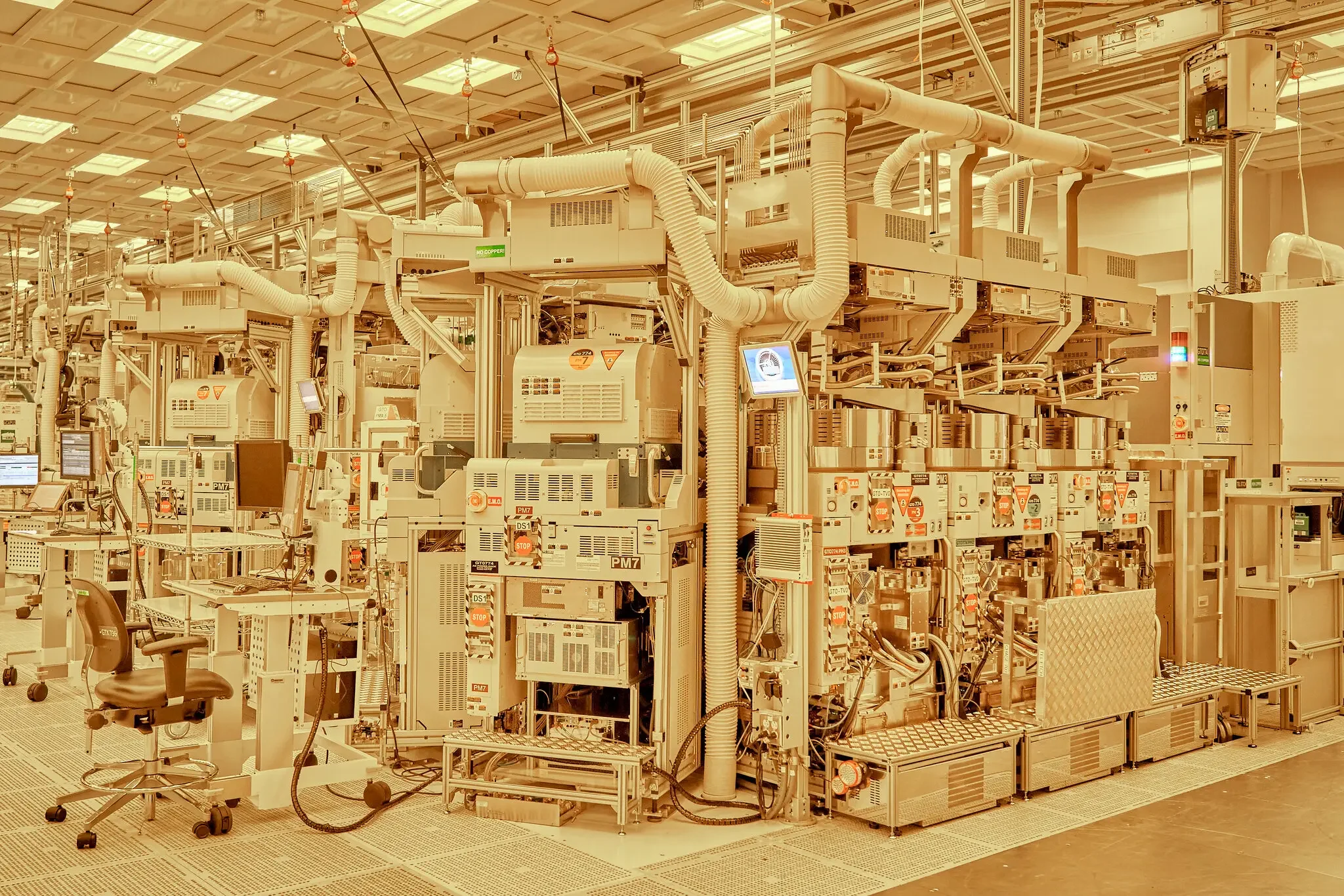
U.S. Government Acquires 10% Equity Stake in Intel: Semi-Nationalization of Strategic Industry
The U.S. government’s 10% equity stake in Intel marks a shift from subsidies to defensive equity—a semi-nationalization designed to shield strategic IP and deliver fiscal dividends for taxpayers. For Intel, it secures survival but risks transforming the company into a state-protected utility. For Samsung, the scenario is more complex: U.S. equity could stabilize succession and secure contracts, but at the cost of Korean sovereignty and exposure to Chinese retaliation. A full Intel–Samsung merger remains improbable, yet the axis of Intel–Samsung–U.S. Treasury now defines the emerging industrial triad reshaping global semiconductors.
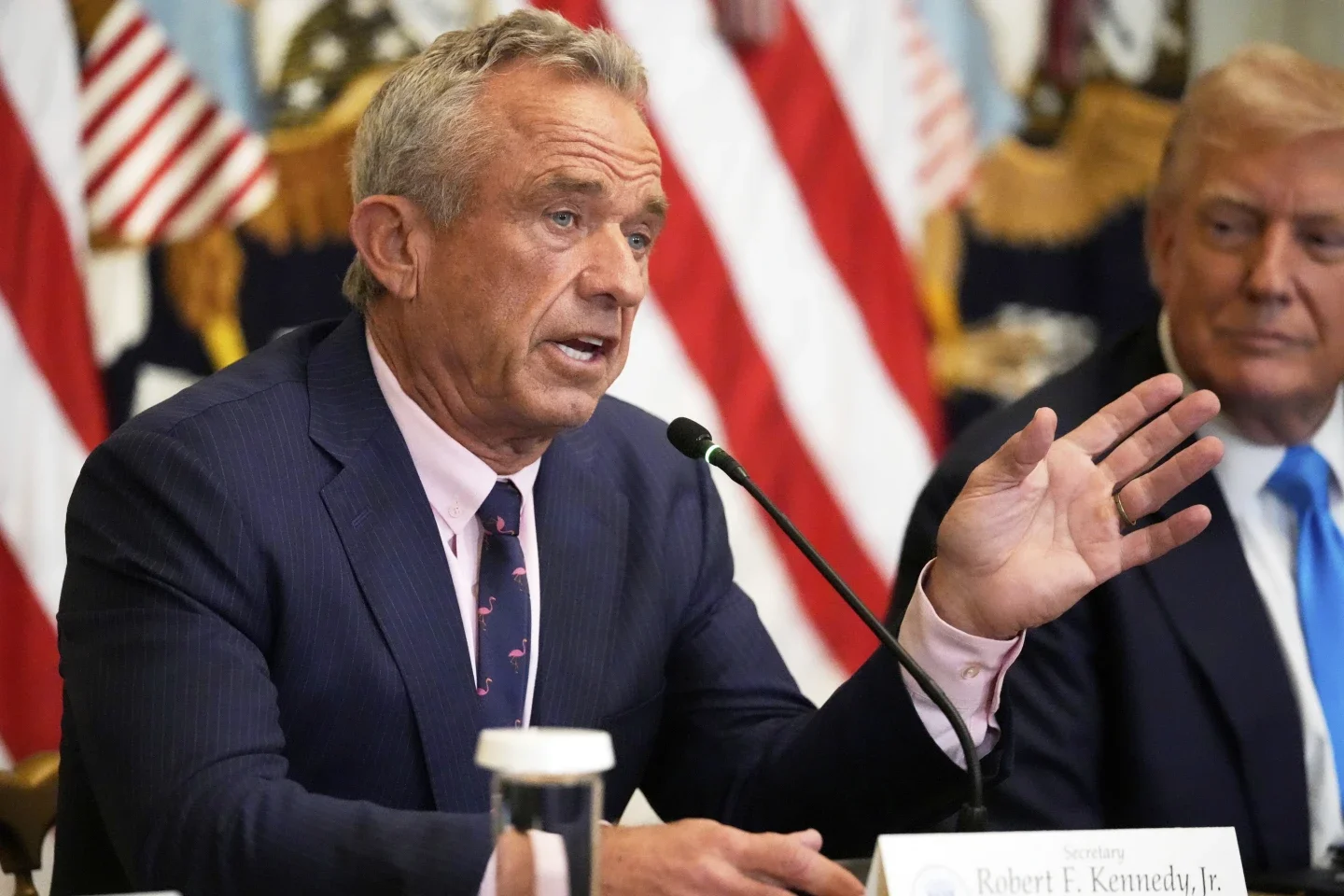
NIH Research Cuts and the DEI Dilemma – Supreme Court Ruling and Structural Implications
The U.S. Supreme Court’s 5–4 ruling to allow the Trump administration to cut $783 million in NIH grants linked to DEI programs is more than a budgetary shift—it is a structural rupture. What began as a noble extension of civil rights has been hollowed into a bureaucratic slogan, a political totem vulnerable to weaponization.
From HIV and cancer research in marginalized groups to mental health studies, critical projects are now reframed as “ideological spending.” The Court’s decision hands the executive wider discretion to defund science for political alignment, collapsing the epistemic contract between research and society.
BBIU further registers a dissent on DEI’s most controversial extension—pediatric sex-reassignment and hormonal interventions. To alter children’s bodies before identity formation is not equity but overreach: an irreversible act that risks lifelong harm under the guise of inclusion.
The NIH–DEI ruling is thus both symbol and signal: science reduced to partisan currency, and inclusion recast as simulation. Without transparency, accountability, and insulation from ideology, the credibility of U.S. research risks collapse.

China’s Tributary Mindset and Korea’s Strategic De-risking
The U.S. conversion of CHIPS Act subsidies into non-voting equity stakes marks a structural transition from fiscal incentives to industrial annexation by equity. For Samsung, Micron, and TSMC, this means their U.S. fabs are no longer “foreign subsidiaries” but U.S. critical infrastructure, embedding them into Washington’s strategic orbit.
At the same time, China runs a dual technology model: paying royalties where enforcement is unavoidable (ARM, EDA, pharma), while stealing or absorbing know-how in vulnerable domains (mature DRAM, OLED), and simultaneously investing to become a future royalty creditor.
The BOE–Samsung OLED case illustrates the turning point: U.S. ITC rulings can bar Chinese products from developed markets, and Samsung can now replicate this precedent globally. Where China cannot evade royalties, its cost advantage collapses, exposing its reliance on low-price + weak after-sales as a market model.
For Korea, the risk is sovereignty erosion by equity: Samsung’s autonomy is diluted, and Seoul loses the ability to act as referee. Survival now depends on dual-hedging (U.S./EU + India/ASEAN) and institutionalizing tech sovereignty through ring-fenced IP, outbound screening, and after-sales competitiveness as a strategic weapon.
BBIU Verdict: Without sovereign safeguards, Korea faces the transformation of its champions into semi-American assets, while China remains confined to mid-tech share. The U.S. succeeds in securing supply chains—but risks overshooting if equity assimilation drives away allied R&D.
![[BBIU] Strategic Triad: U.S. Equity Ambitions in Samsung Electronics and the Geopolitical Risks of Industrial Americanization](https://images.squarespace-cdn.com/content/v1/685a879d969073618e9775db/1755656628445-3FB926EMYVKK36SV2SB3/Blog_CHIPS-Act-Homepage.webp)
[BBIU] Strategic Triad: U.S. Equity Ambitions in Samsung Electronics and the Geopolitical Risks of Industrial Americanization
Between July 31 and August 20, 2025, the U.S.–Korea pact evolved from financial commitment into structural annexation. What began as a $350B outflow agreement has unfolded in phases: tariff escalation, semiconductor hostage-taking, conditional exemptions, and finally the conversion of CHIPS Act subsidies into U.S. equity stakes in Intel, Samsung, TSMC, and Micron.
For Korea, this sequence confirms that every path leads to loss—capital drains outward, sovereignty erodes, and chaebols survive only by becoming semi-American assets. For the United States, it is industrial annexation without war: no tanks, no coups, only contracts, tariffs, and equity.

Trump–Europe–Ukraine: Negotiating Peace Through Territorial Exchange?
The Washington summit must be recognized for what it is: the institutionalization of coercive partition. Trump emerges as indispensable peacemaker, Europe as fatigued enabler, and Ukraine as sacrificial subject. This is not a peace process, but the construction of a coercive armistice architecture—a paradigm of amputated sovereignty disguised as settlement
![[FARA Scrutiny on KAPAC: DOJ Opens Preliminary Review into Pro-Democratic Korean-American Group]](https://images.squarespace-cdn.com/content/v1/685a879d969073618e9775db/1755482207323-2E20BCIWBHIINXN75OSP/0003923632_001_20250818061011789+%281%29.jpg)
[FARA Scrutiny on KAPAC: DOJ Opens Preliminary Review into Pro-Democratic Korean-American Group]
The KAPAC investigation underscores a structural weakness in Korea’s external compliance culture. Unlike Germany or Japan, which institutionalize their lobbying through formal registration, Korea continues to rely on diaspora activism and informal channels. In Washington, such practices are not tolerated: ignorance of FARA is no excuse, and retroactive registration itself can permanently erode credibility. The DOJ’s preliminary review signals that Korean influence in Congress will only be permitted under U.S. legal sovereignty—a shift with direct implications for Seoul’s diplomacy, corporate reputation, and access to American institutions.

Trump–Putin Alaska Summit, August 15, 2025 (Axios + cross-sourced analysis)
The Anchorage summit between Donald Trump and Vladimir Putin was presented as “productive” but ended without a ceasefire or peace agreement. Held at Elmendorf–Richardson with full ceremonial display—red carpet, F-22 and B-2 flyovers—the meeting underscored Putin’s symbolic rehabilitation on U.S. soil. Trump shifted from pressing for an immediate truce to calling for a “comprehensive peace deal,” leaving the conflict unresolved but diplomatically reframed.
![[U.S. Pharma Tariffs Threaten Ireland’s Fiscal Engine – Strategic Risk Assessment]](https://images.squarespace-cdn.com/content/v1/685a879d969073618e9775db/1755305501206-AONT4N77HNLZV55D46JB/MixCollage-03-Apr-2025-10-29-AM-4452-1743672548322.jpg--explainer__what_are_tariffs_and_how_will_they_impact_ireland_.jpg)
[U.S. Pharma Tariffs Threaten Ireland’s Fiscal Engine – Strategic Risk Assessment]
In 2024, Ireland exported €72.6 billion in goods to the U.S., of which approximately €44–45 billion (61%) were pharmaceuticals. The Section 232 investigation thus directly targets a trade flow equal to roughly one-fifth of Ireland’s total goods exports. Under a 15% tariff and partial relocation of high-value operations, annual losses could reach €4.4–€9 billion in pharma exports, €2–€4 billion in corporate tax revenue, and up to 28,000 jobs. Should the U.S. extend this repatriation logic to other sectors, the economic shock would escalate to a regime-change event—eroding 30–45% of corporate tax receipts, cutting €15–€25 billion in exports to the U.S., and contracting GNI* by up to 7% over five years.
![[China’s UHV Grid vs. U.S. Energy Infrastructure: Strategic Gap in AI-Era Power Readiness]](https://images.squarespace-cdn.com/content/v1/685a879d969073618e9775db/1755233188395-DMKOGGXHWLK56BG4Z2YP/GettyImages-2225403694-e1755201043377.webp)
[China’s UHV Grid vs. U.S. Energy Infrastructure: Strategic Gap in AI-Era Power Readiness]
Global UHV expansion is now constrained by a two-year backlog in critical components, with China controlling the largest production capacity. Nations that fail to secure manufacturing slots and diversify suppliers risk delivering transmission projects late, over budget, and strategically compromised.
![🟡 [Revocation of Executive Order 14036 – U.S. Antitrust Policy Reset]](https://images.squarespace-cdn.com/content/v1/685a879d969073618e9775db/1755161202079-9YWD74LDIM9NHMTLIDMF/WH47-Presidential-Actions-Social-Share-Card.webp)
🟡 [Revocation of Executive Order 14036 – U.S. Antitrust Policy Reset]
On August 13, 2025, President Trump revoked EO 14036, dismantling Biden’s flagship pro-competition directive. Marketed in 2021 as a structural antitrust reset, EO 14036 dispersed 72 non-binding directives across more than a dozen agencies, without granting new legal powers or securing congressional backing. Its repeal marks not just deregulation, but a doctrinal shift: under “America First Antitrust,” merger speed becomes a strategic asset, prioritizing industrial consolidation over traditional consumer-protection metrics—especially in strategic sectors like biopharma, technology, and energy.
![🟡 [President Lee Orders Large-Scale Consolidation of Public Institutions]](https://images.squarespace-cdn.com/content/v1/685a879d969073618e9775db/1755144504194-Y76I1GFTPH46K80EDOAN/0003461915_001_20250814114519585.jpg)
🟡 [President Lee Orders Large-Scale Consolidation of Public Institutions]
President Lee’s proposed large-scale consolidation of South Korea’s public institutions is structurally positioned to function less as fiscal austerity and more as a pre-electoral architecture of control. With a realistic launch in mid-2026, the restructured network could be fully populated by politically aligned leadership by early 2027, over a year before the April 2028 legislative elections.
In the base-case macro scenario — 0% GDP growth, USD 450B outbound investment drain, probable M2 expansion, and a high-risk housing bubble — the measure will likely fail to deliver net savings, while creating rigid, politically directed fiscal pipelines via automated welfare. This configuration raises the probability of impeachment or forced resignation to 35–40% before 2028, particularly if the real estate market collapses and opposition forces consolidate parliamentary leverage.
![🟡 [BLS Pause Signal] Trump’s BLS Pick Floats Halting Monthly Jobs Report](https://images.squarespace-cdn.com/content/v1/685a879d969073618e9775db/1755050149332-TW8LJ44634501010WCF8/689a95b8170000e72563df6e.webp)
🟡 [BLS Pause Signal] Trump’s BLS Pick Floats Halting Monthly Jobs Report
Antoni’s critique of the BLS is technically valid — outdated seasonal models, high-turnover sector contamination, and delayed administrative data all degrade initial readings — but his proposed pause of monthly jobs reports misfires operationally. Transparency and continuity are strategic assets; redesigning methodologies, segmenting volatile labor categories, and layering verified hard data over projections would improve fidelity without creating information vacuums that fuel political narrative control.