
South Korea’s $350 Billion Dilemma: Between IMF Diplomacy and Trump’s “Upfront” Ultimatum
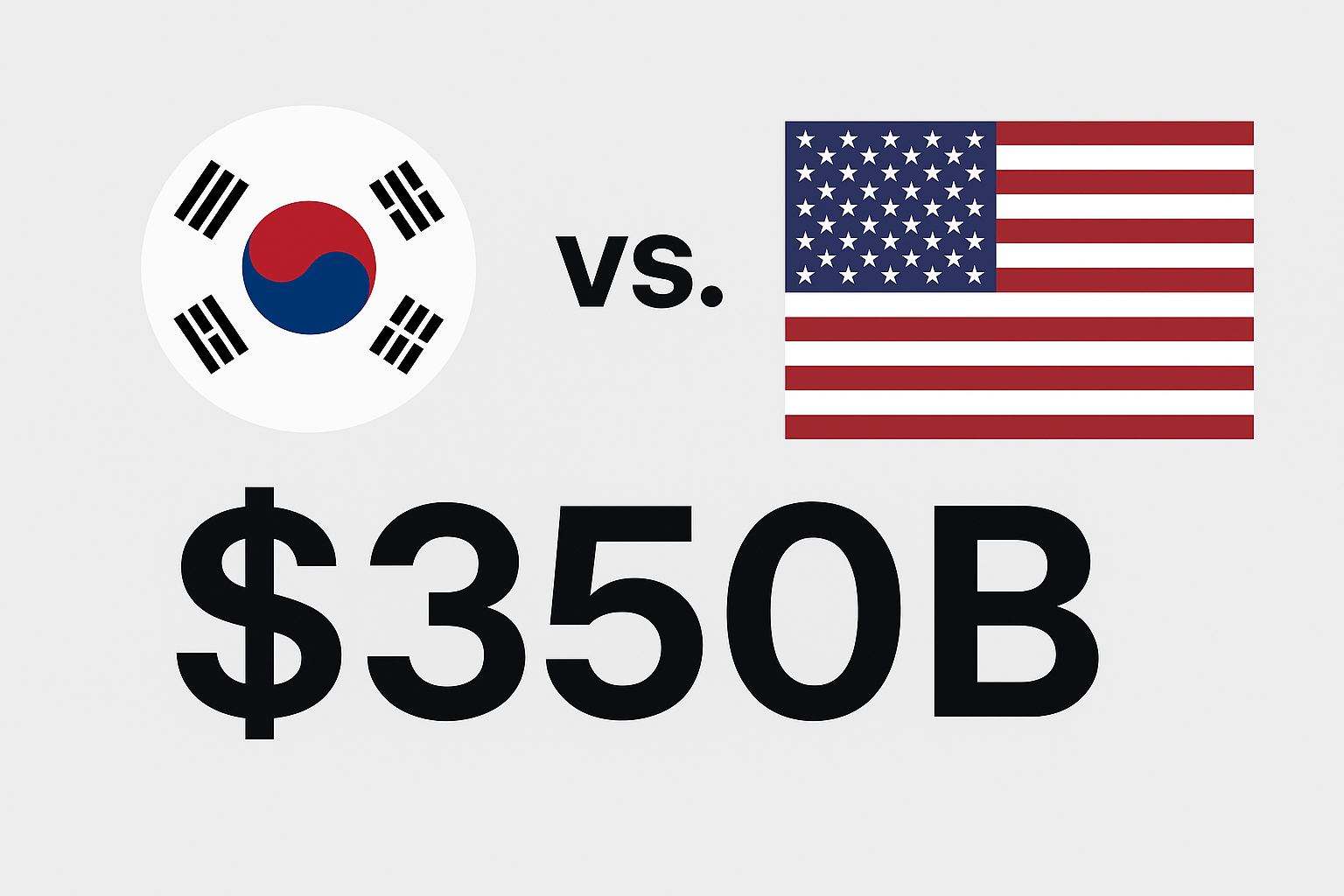
South Korea’s $350B clash with Washington has shifted from economics to symbolism. Deputy PM Koo Yun-cheol admitted the upfront payment is impossible; Trump insists on it as proof of obedience, mirroring Japan’s capitulation. The trajectory—SPC Trap, Tariff Gamble, Silent Resistance, IMF admission—shows Korea trapped between technical reality and political symbolism. The number is not liquidity, but a test of subordination.
Annex I – Key Missteps by South Korea
Annex II – Structural Constraints & Acceptable Narrative
China’s Robotic Frontier: Western Executives Confront the “Dark Factory” Reality
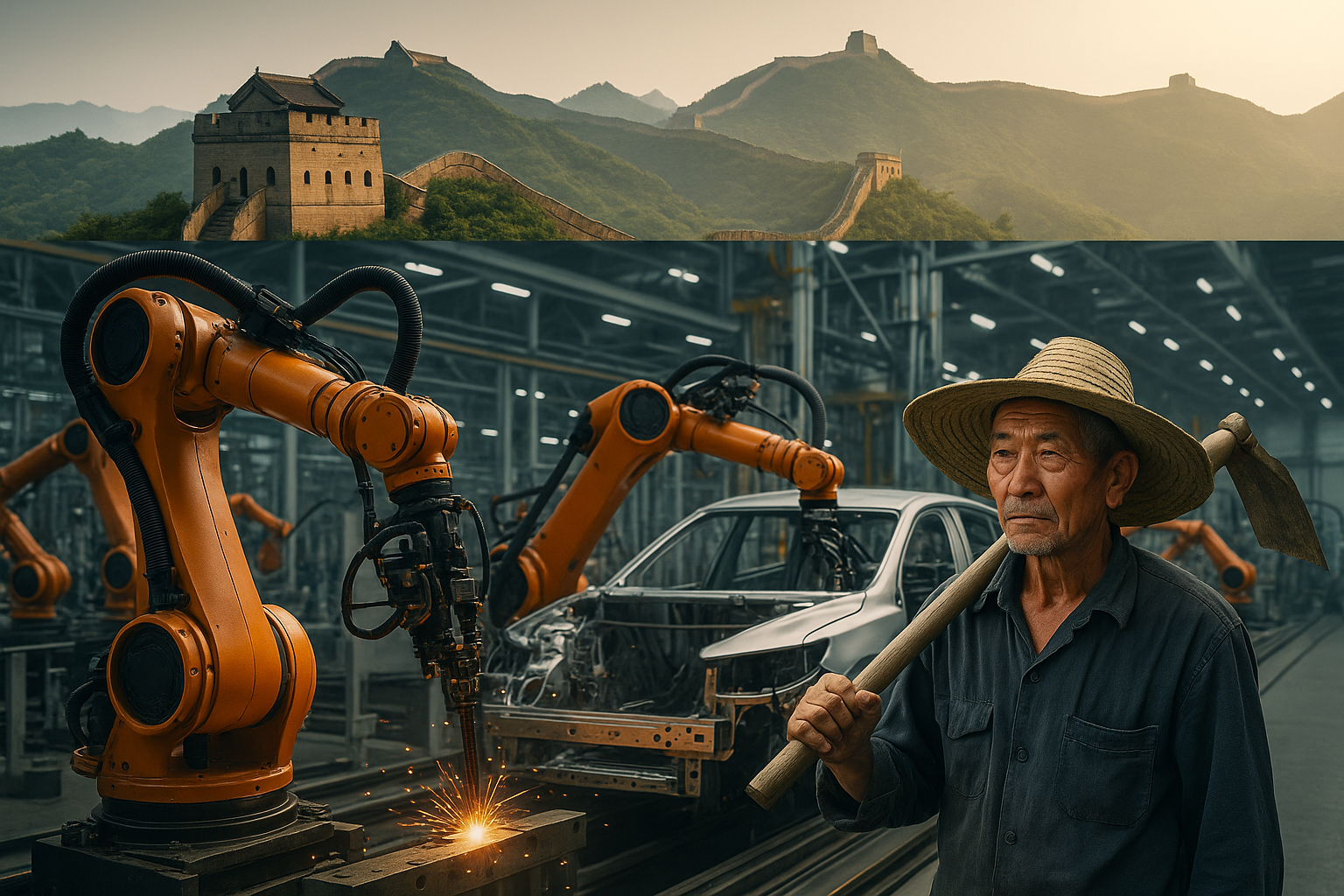
Western executives visiting China return with an uneasy realization: the country is no longer competing on low-cost labor, but on automation at scale. In 2023 alone, China installed more than 276,000 robots—over half of the world’s total—bringing its operational stock above 1.75 million units. Factories in Shanghai and Shenzhen now operate at near “lights-out” levels, where robotic arms assemble vehicles and electronics with minimal human presence.
Yet behind this futuristic façade lies a fractured social reality. While coastal provinces embrace robotics and AI-driven production, millions of workers in the interior still rely on semi-manual assembly, and rural China remains rooted in labor-intensive agriculture. The result is three Chinas living side by side: one in the 19th century, one in the 20th, and one in the 21st. This temporal inequality is as dangerous as it is striking—an industrial triumph masking a deep social fault line.
Trump’s Retaliation Against China’s Rare-Earth Export Controls and Market Shock
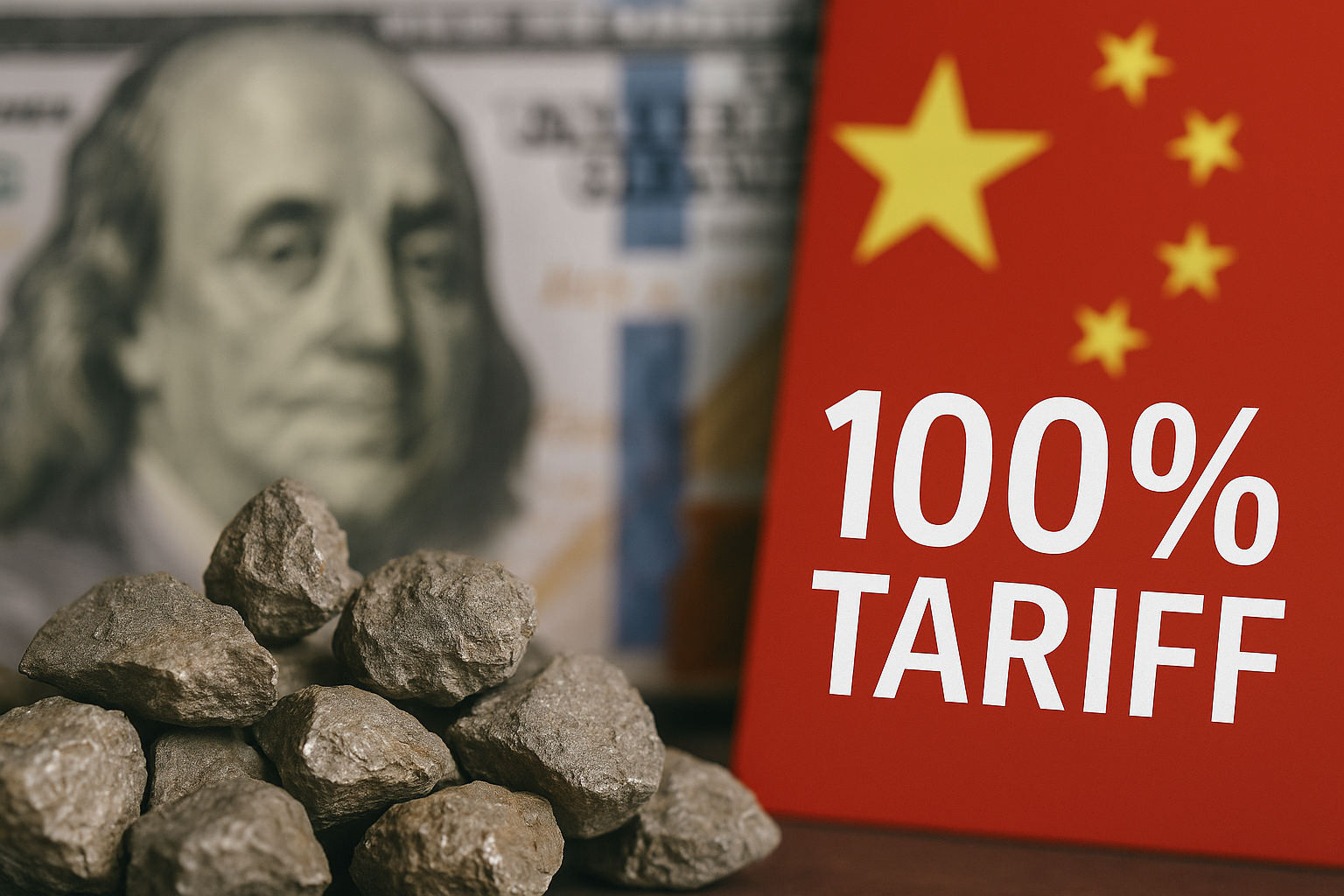
China’s MOFCOM Announcement No. 61 tightens rare-earth export controls and extends them extraterritorially to goods with ≥0.1% Chinese REE content. The U.S. counters: an additional 100% tariff on Chinese imports from Nov 1 (and signals controls on “core software”). Markets slide: Dow −1.9%, S&P −2.7%, Nasdaq −3.56%.
Shock mechanism.
Beijing weaponizes critical materials; Washington weaponizes market access and software. The contest shifts from tariff cycles to choke-point warfare.
Annex 1 — Rare Earths and Semiconductors (Key Points)
Annex 2 — If China levies 100% on U.S. imports
Annex 3 — If the U.S. levies 100% on Chinese imports
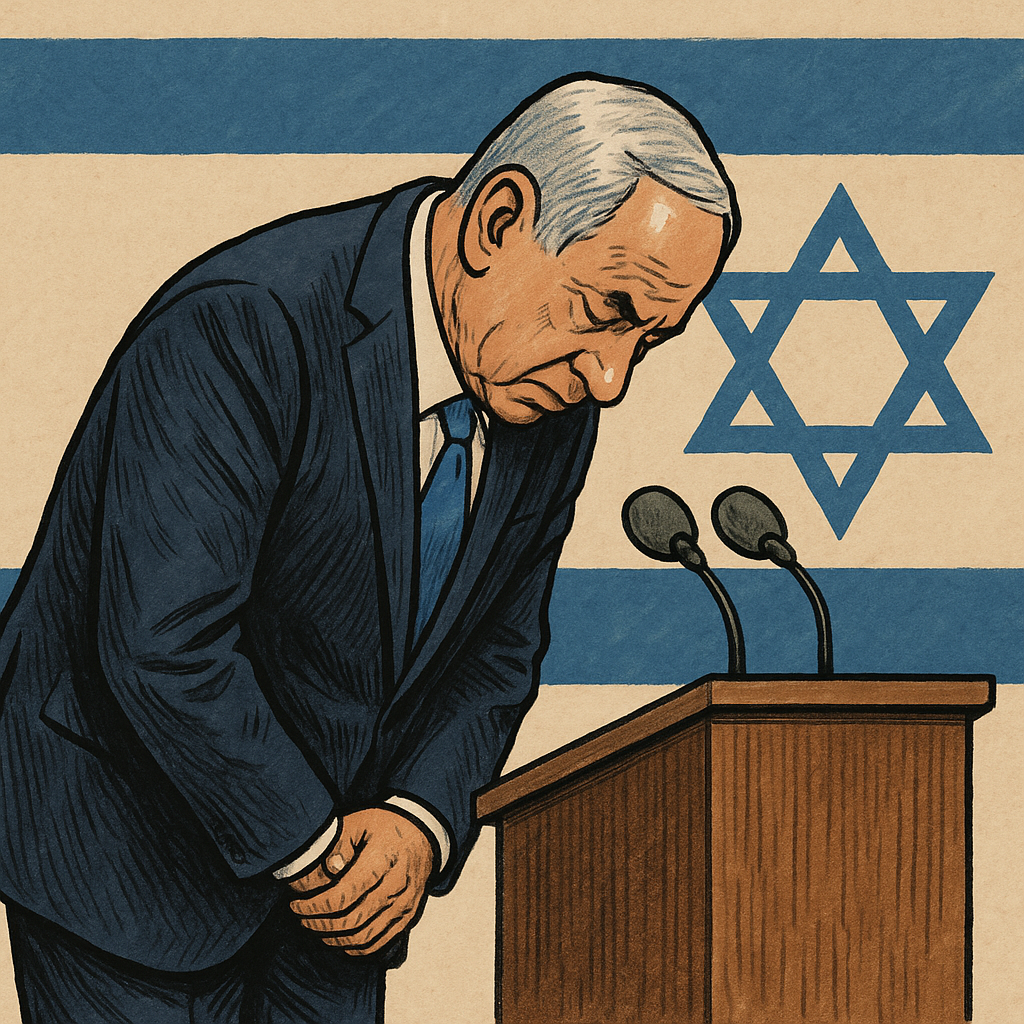
BBIU Daily Report — Doha Strike → Peace Pressure: What Changed and What Holds
The September 9 strike on Doha was intended as a show of strength; instead, it marked the unraveling of Israel’s most valuable strategic asset: its narrative of victimhood. Six people were killed, Hamas leaders survived, and within days Netanyahu was forced into an unprecedented apology to Qatar. Washington, scrambling to restore credibility, issued a formal security guarantee to Doha and publicly backed a UN condemnation of Israel’s actions.
For decades, Israel thrived on the perception of being the embattled state under siege. Doha inverted that equation. The image now is of a state willing to bomb an ally’s capital in the midst of mediation—an act that transformed sympathy into suspicion. The apology, the U.S. guarantee, and Trump’s rebuke are not just tactical outcomes; they are structural markers of a shift in leverage. Israel has over-tensioned the rope, and the narrative gravity has snapped.
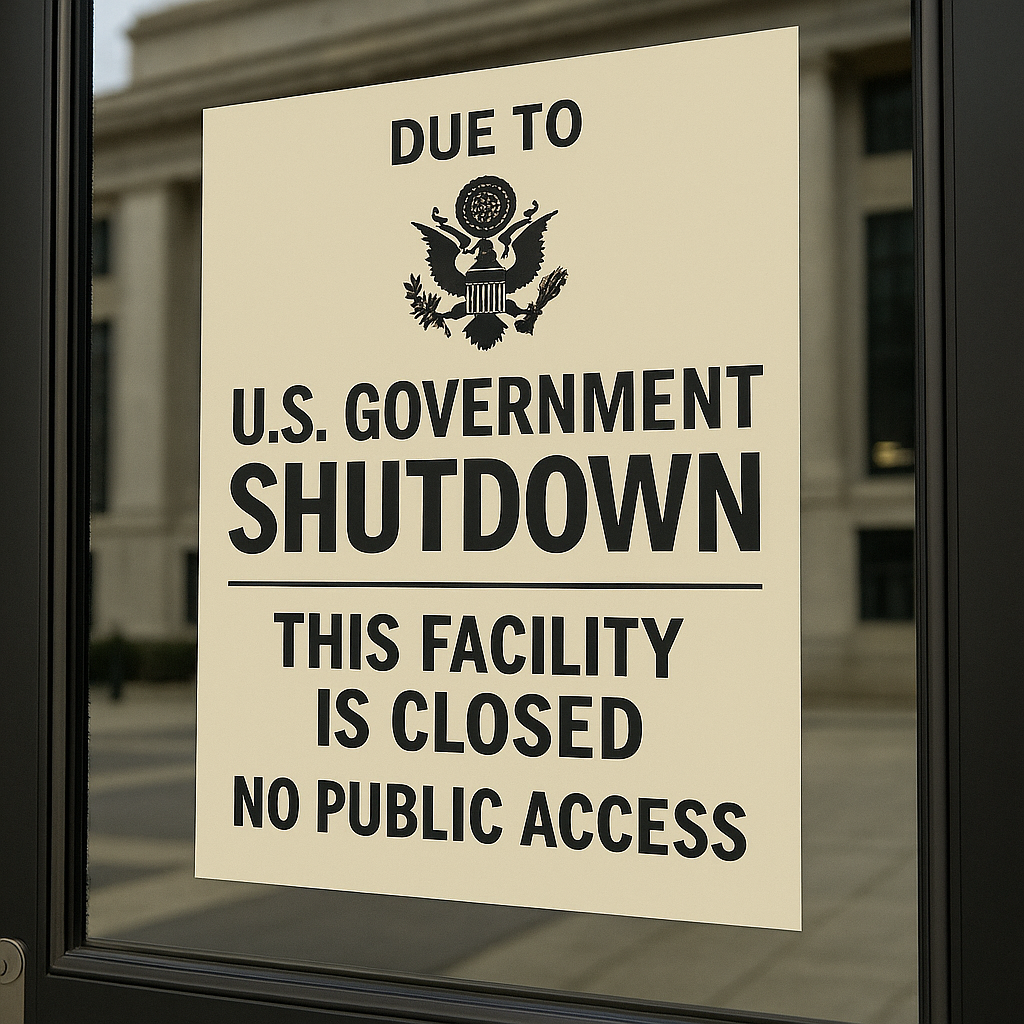
U.S. Government Shutdown 2025: A Structural Blackout in Economic Signaling
The 2025 U.S. government shutdown is not a fiscal shortfall but a legislative paralysis. Congress failed to authorize spending despite available funds, triggering the furlough of 750,000 federal employees and halting the release of key economic data. This “statistical blackout” blinds markets and policymakers, while globally it undermines confidence in the dollar as the world’s reserve currency. The Executive cannot move money without congressional appropriations; the dysfunction lies in the architecture of governance itself. Far from being cornered, Trump may use this breakdown to argue for a leaner federal state, reinforcing his administration’s narrative that inefficiency must be cut, even if the faucet of government has been shut off at its source.
BBIU Special ReportQuantico → Purge: Our Forecast Confirmed
On September 30, 2025, President Donald Trump and Defense Secretary Pete Hegseth assembled more than 800 generals and admirals at Quantico — an event described by mainstream outlets as a motivational address. Yet BBIU’s forecast, published before October 3, identified it as a tamiz: a filtration mechanism to test loyalty and prepare removals. Within 72 hours, the Pentagon confirmed the dismissal of Jon Harrison, Chief of Staff to the Navy Secretary, following the Senate confirmation of Hung Cao as Under Secretary. This sequence — Quantico → Cao confirmation → Harrison removal — validates BBIU’s scenario methodology, demonstrating forecast-to-reality alignment in record time.
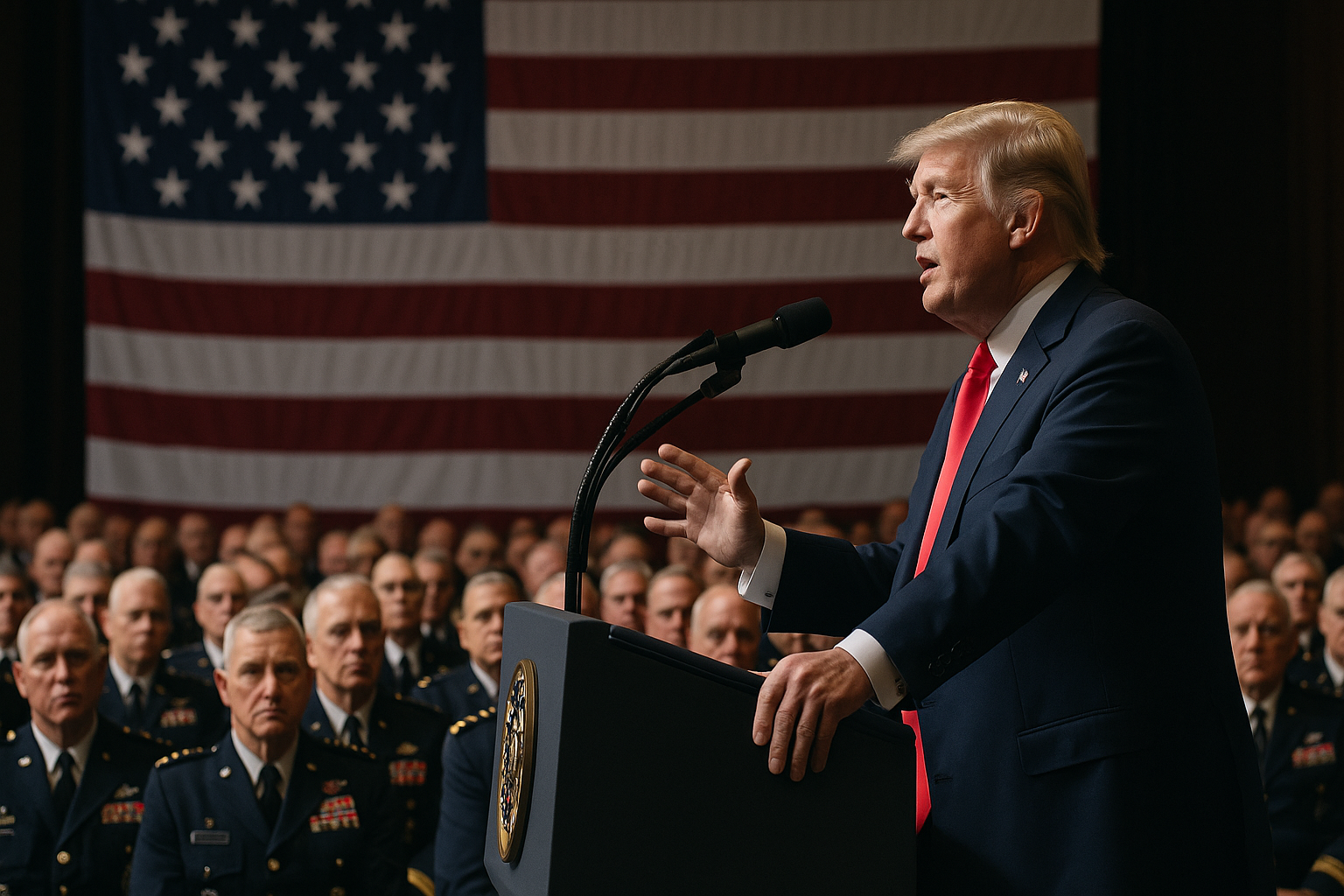
The Quantico Assembly: Trump’s Silent Tamiz of the U.S. Generals
What happened (Sept 30, 2025).
President Trump and Defense Secretary Pete Hegseth gathered ~800 generals/admirals at Marine Corps Base Quantico—a rare, near-unprecedented convocation. Public remarks hammered “standards,” with Hegseth’s now-quoted line about “fat generals,” while reporting noted a tightly controlled, partly closed-door format. ABC News+2Reuters+2
Why it matters.
Form and timing suggest a filtration (tamiz) function: staging loyalty, observing dissent, and preparing ground for personnel reshaping under a more politicized civil–military posture. Independent coverage emphasized the scale/opacity of the meeting rather than concrete policy disclosures. The Washington Post+1
Signal vs. substance.
Vague, discipline-centric rhetoric is the operational feature (not a bug): it projects unity while reserving directives for private channels—useful if the White House pursues controversial moves (domestic deployments, force-structure changes). Follow-on press-access clashes at the Pentagon reinforce the trend toward tighter information control. TIME+1
Annex 1 — Economic Vector (DoD Personnel Shift)
Annex 2 — China–Russia–North Korea Axis (Asymmetry Snapshot)
Annex 3 — U.S.–Israel–Arab Triangle (Coercive Stability

South Korea’s Digital Catastrophe: The NIRS Fire and the Structural Fragility of National E-Governance
Event. A fire at the National Information Resources Service (NIRS), Daejeon disabled 96 core systems and disrupted 647 total, with only 3.9% backed up. Citizens were forced back to fax, mail, in-person requests. Full restoration not expected until late October.
Cause.Expired lithium-ion UPS batteries, flagged in 2024 manuals and inspections, ignited. Critical protocols (battery replacement, segregation, de-energization) were ignored.
Annex I — Structural Problems
Annex II — Immediate Actions (“Accident” Focus)
Annex III — Macro & Reform Agenda

Israeli Strike on Doha: From Counterterrorism to Strategic Self-Immolation
On September 9, 2025, Israeli warplanes bombed Doha, marking the first time Israel struck the capital of a U.S. Major Non-NATO Ally. Six people were killed, including a Qatari security official, while Hamas leaders reportedly survived. The political fallout has been immediate: ceasefire talks collapsed, Arab states convened an emergency summit, and U.S. credibility as Gulf security guarantor was shaken. The silence of American and Saudi defense systems during the strike raised questions of complicity or strategic blindness, further undermining confidence in the existing order. Analysts now warn that the Doha strike may accelerate arms diversification away from the U.S., strengthen momentum for an “Arab NATO,” and embed a new risk premium in global oil markets.

Pharmaceutical Tariffs, Furniture Duties, and Heavy Trucks: Trump’s October 1 Extraction Pivot
President Trump’s October 1 tariffs on pharmaceuticals, furniture, and heavy trucks are not isolated trade measures but enforcement levers within a broader architecture of extraction. The 100% duty on branded drugs reframes the U.S. market as an “invest-or-exit” zone, compelling foreign pharma to localize production. Duties on cabinets, vanities, and upholstered furniture tie directly to construction, symbolically protecting the American household, while the heavy truck tariff links industrial policy to both trucker politics and the advent of autonomous freight.
In contrast, Korea’s $350B “upfront” obligation — compared to Argentina’s liquidity swap relief — highlights a divergence in U.S. treatment of partners: alignment yields concessions, hesitation yields extraction. Domestic propaganda in Seoul frames these developments as nationalist victories, but the reality is structural subordination reinforced through capital, logistics, and healthcare levers.
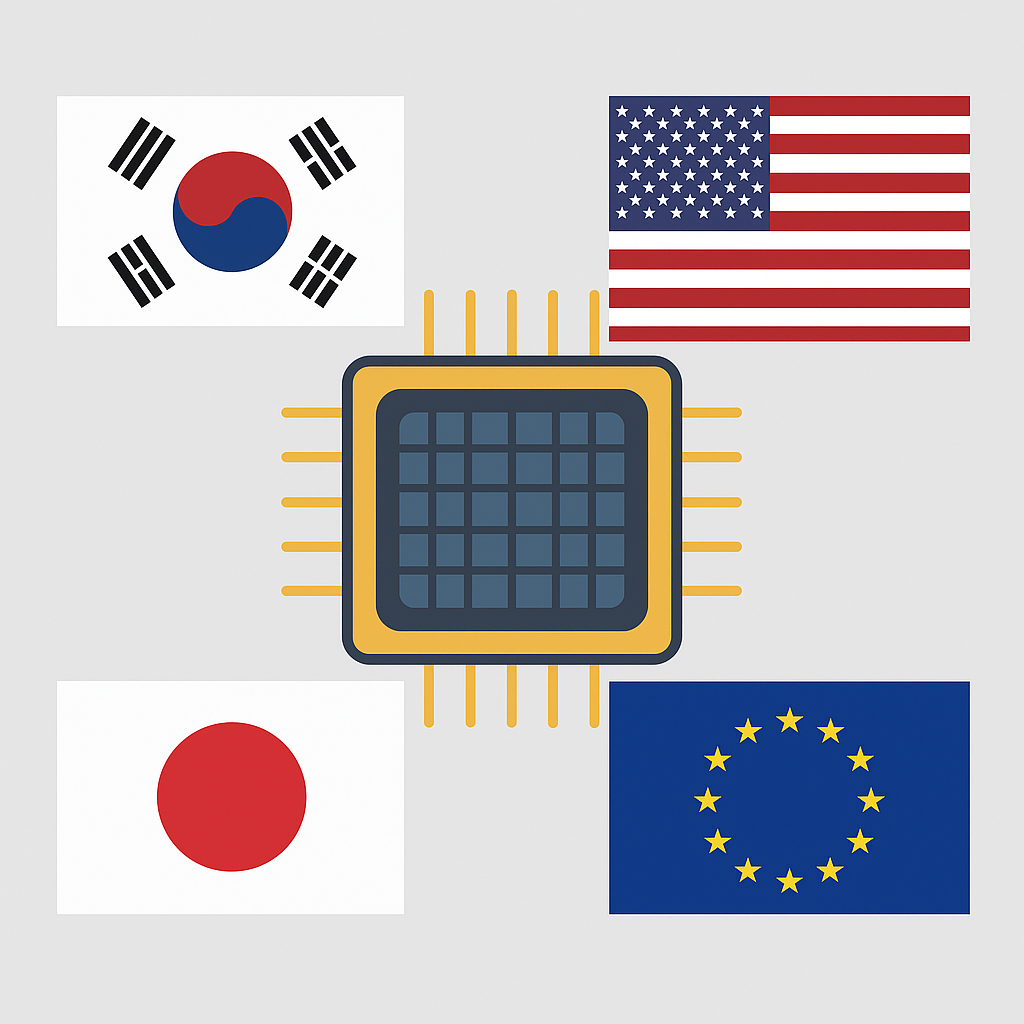
SK–Japan Semiconductor Collaboration: From Photonic Ambitions to Economic Bloc Proposals
SK Group Chairman Chey Tae-won’s call for deeper collaboration with Japan marks more than a business partnership—it signals a structural realignment in the global semiconductor race. While the U.S. extracts capital through tariffs, forced investments, and a $100,000 H-1B fee, Japan is locked into an all-or-nothing gamble on Rapidus and IOWN, with over $50 billion already committed. Korea, meanwhile, faces a fracture: conglomerates like SK and Samsung see Japan as the logical partner, but President Lee’s political base prevents overt alignment.
The paradox is clear: Japan cannot retreat, Korea cannot openly advance, and the U.S. cannot deliver frontier 2 nm technology. Against this backdrop, SK–Japan photonic cooperation embodies the first embryonic bloc preparing for the transition from copper to light, as outlined in BBIU’s white paper on Q-Photonic Computing.
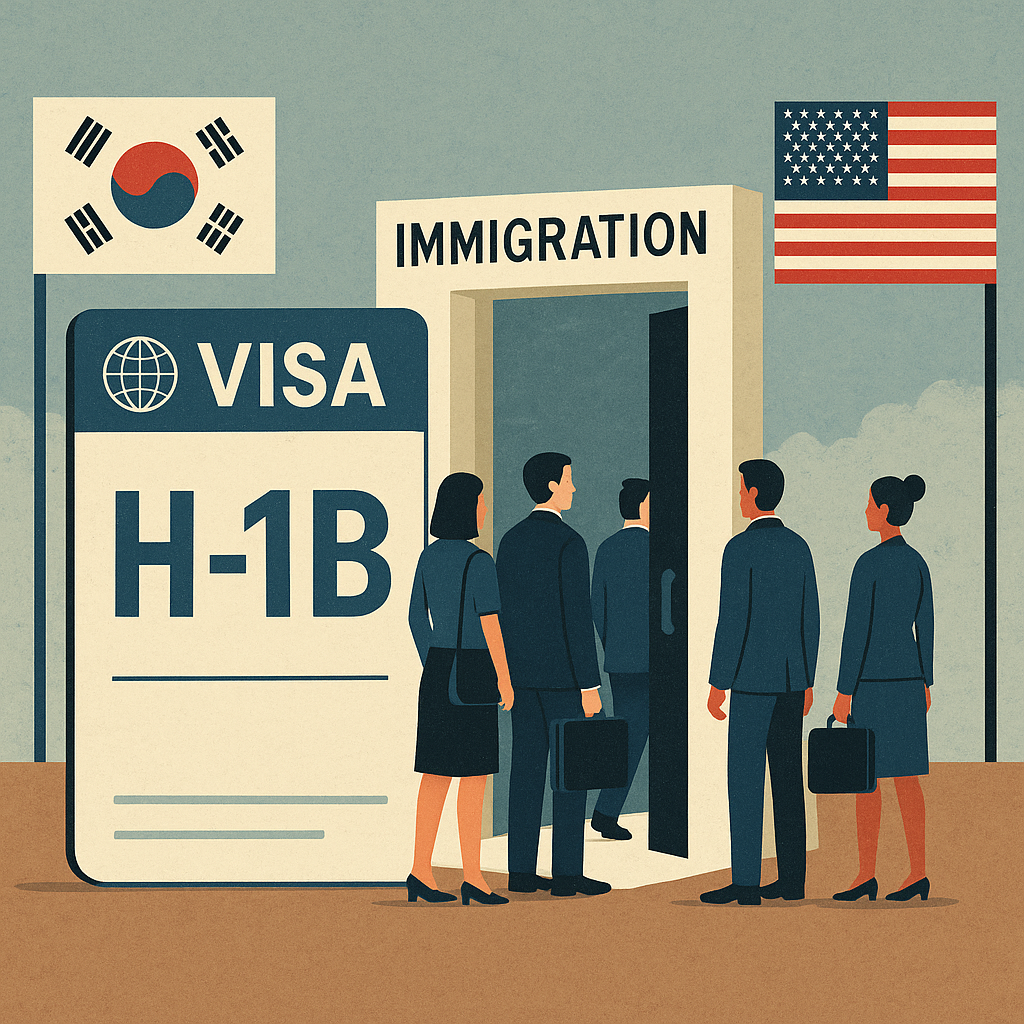
The $100,000 H-1B Fee: Trump Converts Talent Migration into Capital Extraction
Visas, Trade, and Capital: Architecture of Control and Reordering (2025)
On September 19, 2025, the White House imposed a US$100,000 annual fee per H-1B visa petition, reframing skilled immigration as a capital-based gatekeeping mechanism. No longer an administrative process, entry now depends on ability to pay or political alignment, with a discretionary “national interest” clause allowing selective exemptions.
The immediate effect is destabilization: multinationals can absorb costs, but SMEs, startups, universities, and rural hospitals face exclusion. International doctors serving underserved areas are particularly at risk, worsening U.S. healthcare shortages.
The medium-term effect is reordering: exemptions become tools of negotiation, Congress is pressed toward legislative reform, and foreign governments—from South Korea, negotiating its $350B package, to India, the largest H-1B user—must recalibrate strategies.
BBIU’s assessment: this is not immigration reform but the institutionalization of extraction as policy, embedding visas, tariffs, and capital flows into a single architecture of transactional compliance.
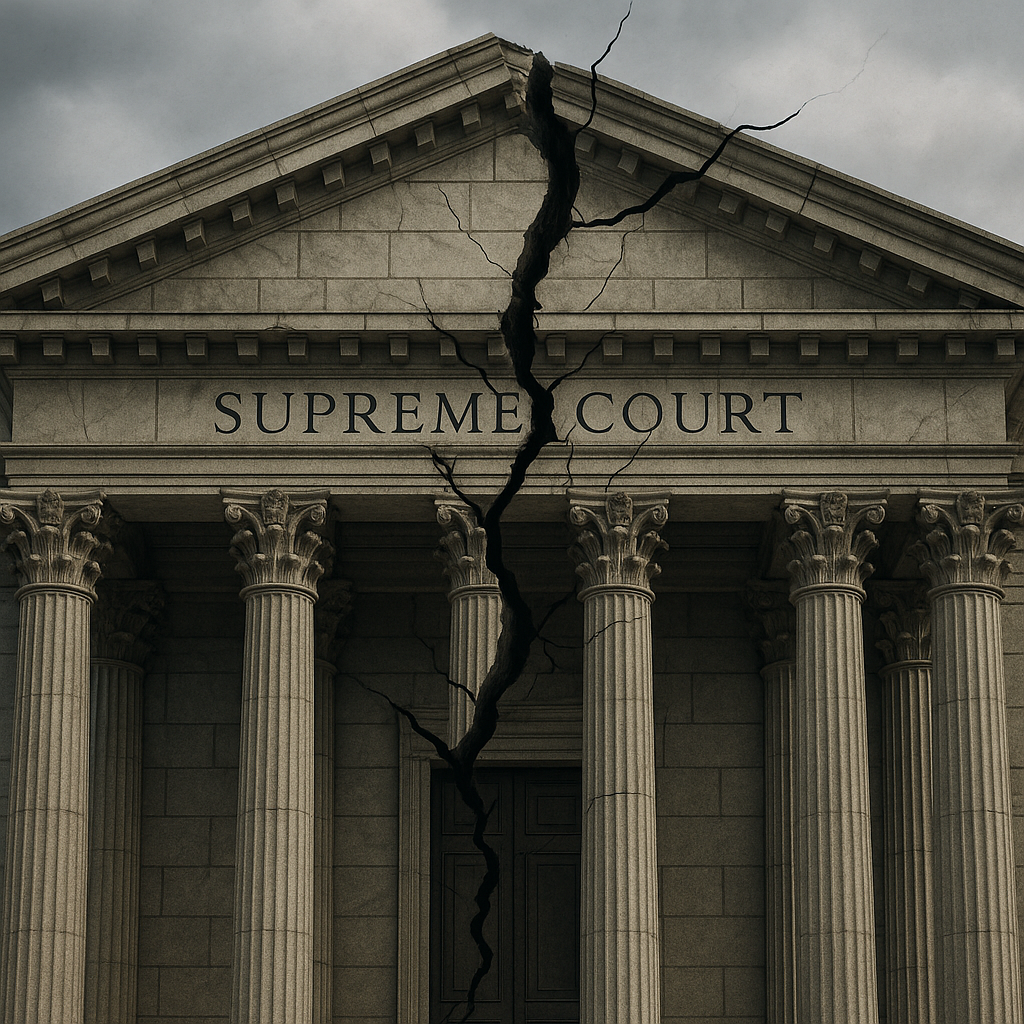
Judicial Siege in Seoul – Supreme Court Under Coordinated Political Pressure
The Democratic Party’s assault on Chief Justice Cho Hee-dae is not a judicial scandal but a structural offensive to discipline the Supreme Court. No evidence shows misconduct in the May 2025 overturn-and-remand decision; yet Cho has been branded a “judicial coup” instigator, pressured to resign, and threatened with impeachment. The push for a Sedition Tribunal reveals the deeper aim: to neutralize an independent actor, embed legislative control in case allocation, and shield the presidency from judicial scrutiny.
The Argentine precedent of the “Corte automática” (1990s) shows the consequences: rapid capture, but decades of paralysis, mistrust, and institutional fragility. South Korea now risks following this trajectory—a formal democracy hollowed out by judicial subordination.
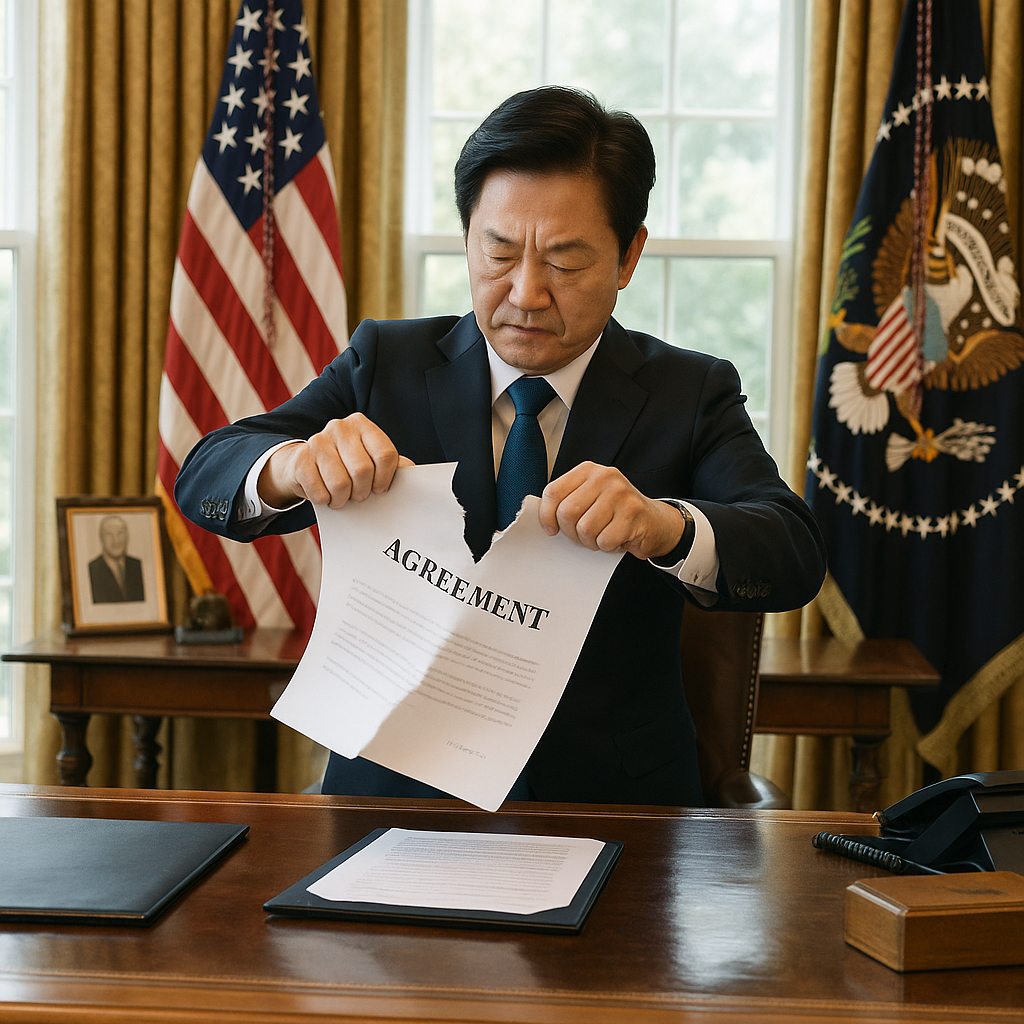
Korea’s $350B Negotiation Stalemate with the U.S.: Lee’s Silent Resistance
President Lee is not negotiating; he is stalling. His defiance plays well at home, but abroad it dissolves. Trump does not need a single strike — he can suffocate Korea layer by layer: a “review” of ESTA to humiliate, a whisper to freeze investment, an IMF report to rattle markets, tariffs kept in reserve. Each step looks technical, lawful, inevitable. For Lee, the real danger is not the $350 billion check, but the slow erosion of Korea’s status and credibility. Every day he delays, the walls close in further.
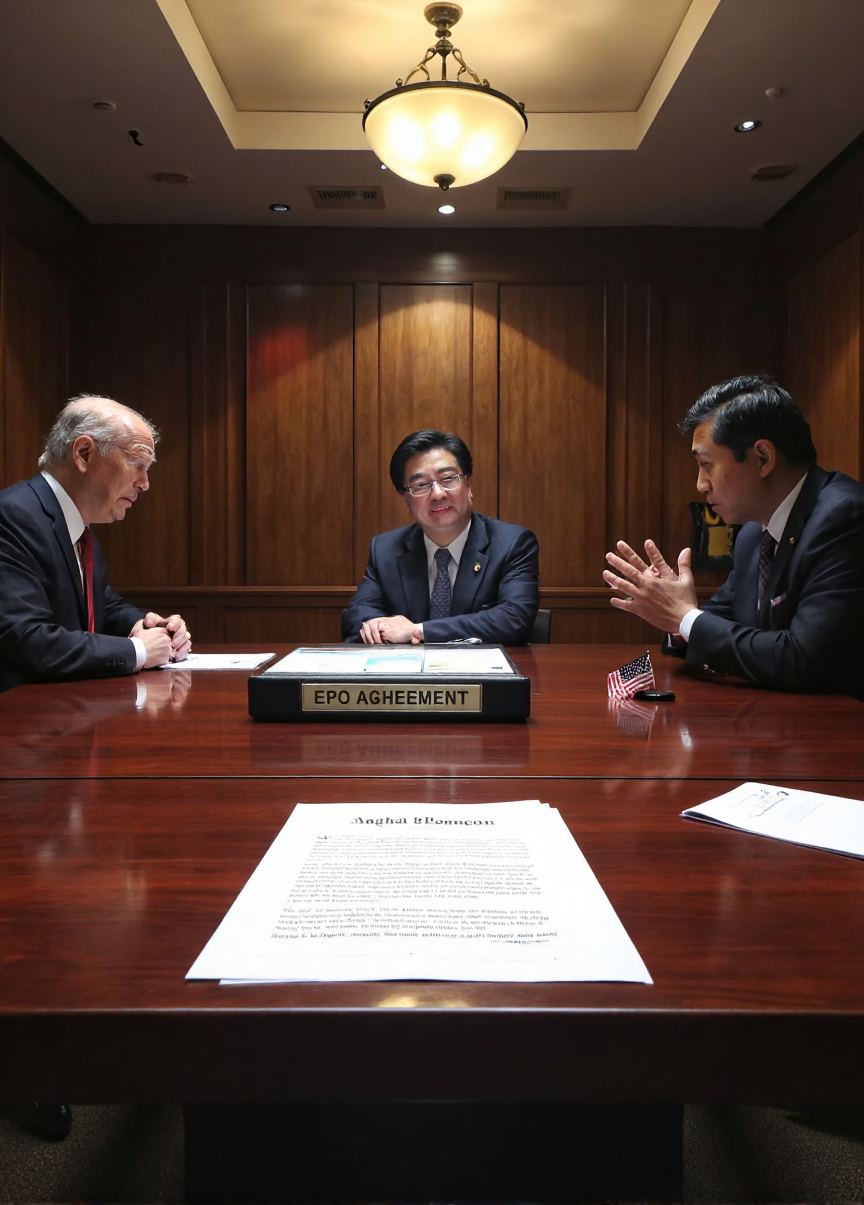
The SPC Trap: Korea’s $350B Negotiation with the U.S.
The Channel A leak on September 12 reframed the $350B U.S.–Korea trade pact not as “investment cooperation” but as financial confiscation. According to the report, Washington demanded that Seoul deposit the full sum in cash into a U.S.-controlled SPC, with all profits retained in America. While unverified by international outlets, the leak functions politically: it gives President Lee cover to resist an agreement that would drain Korea’s reserves and expose its currency to systemic fragility. As BBIU detailed in Deadlock at the Core, the forex dimension—not tariffs—is now the decisive axis.
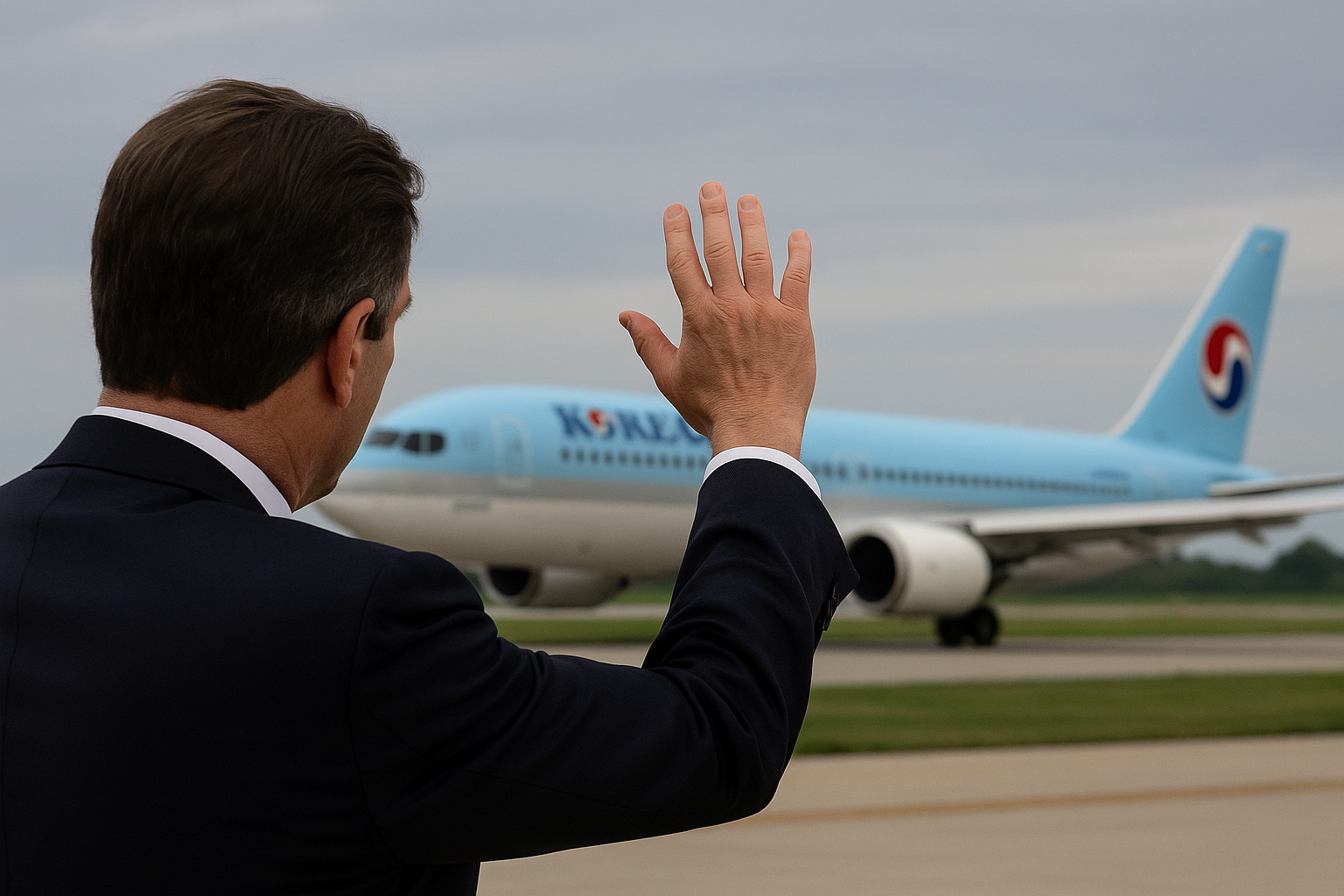
South Korea’s Tariff Gamble: Between Post-Election Machete and Japan-Style Capitulation
The U.S.–South Korea tariff dispute has moved beyond numbers. What began as a $350B pledge in Washington now collides with the Georgia raid, reputational damage, and an ultimatum from Secretary Rutnick: sign a Japan-style MoU or face punitive tariffs. For Seoul, the choice is binary — post-election escalation or structural capitulation. In alliance politics, the word of the weak is not a promise. It is a sentence.
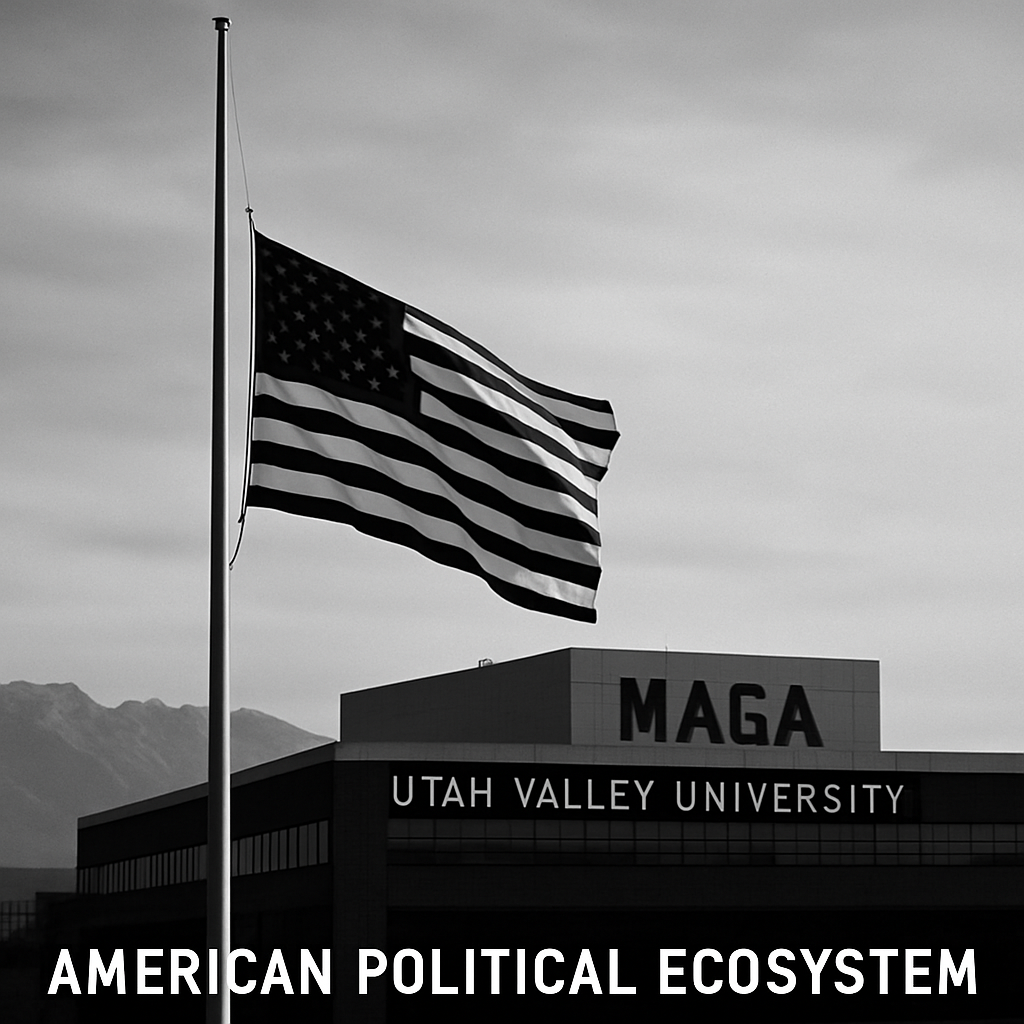
Charlie Kirk Fatally Shot During Utah Valley University Event – Political Assassination in the U.S.
The assassination of Charlie Kirk at Utah Valley University, one month before the 2025 Congressional elections, is not the act of a lone gunman but the removal of a structural node in the American political ecosystem. The precision of the shot, the vantage point, and the clean disappearance all point to professionalized action, possibly contracted.
This killing is both tactical —a demonstration of skill and planning— and symbolic —a direct strike against the youth recruitment infrastructure of Trumpism. Its timing ensures maximum electoral impact: in the short term, it galvanizes the MAGA base through martyrdom, while in the medium term it weakens Turning Point USA, creating opportunities for Democrats and rival conservatives.
The event exposes the fragility of the American civic arena: universities turned into battlefields, influencers elevated to targets, and the FBI controlling a narrative that both sides contest. Political assassination has re-entered the repertoire of U.S. power struggles, with consequences that will reverberate far beyond this election cycle.
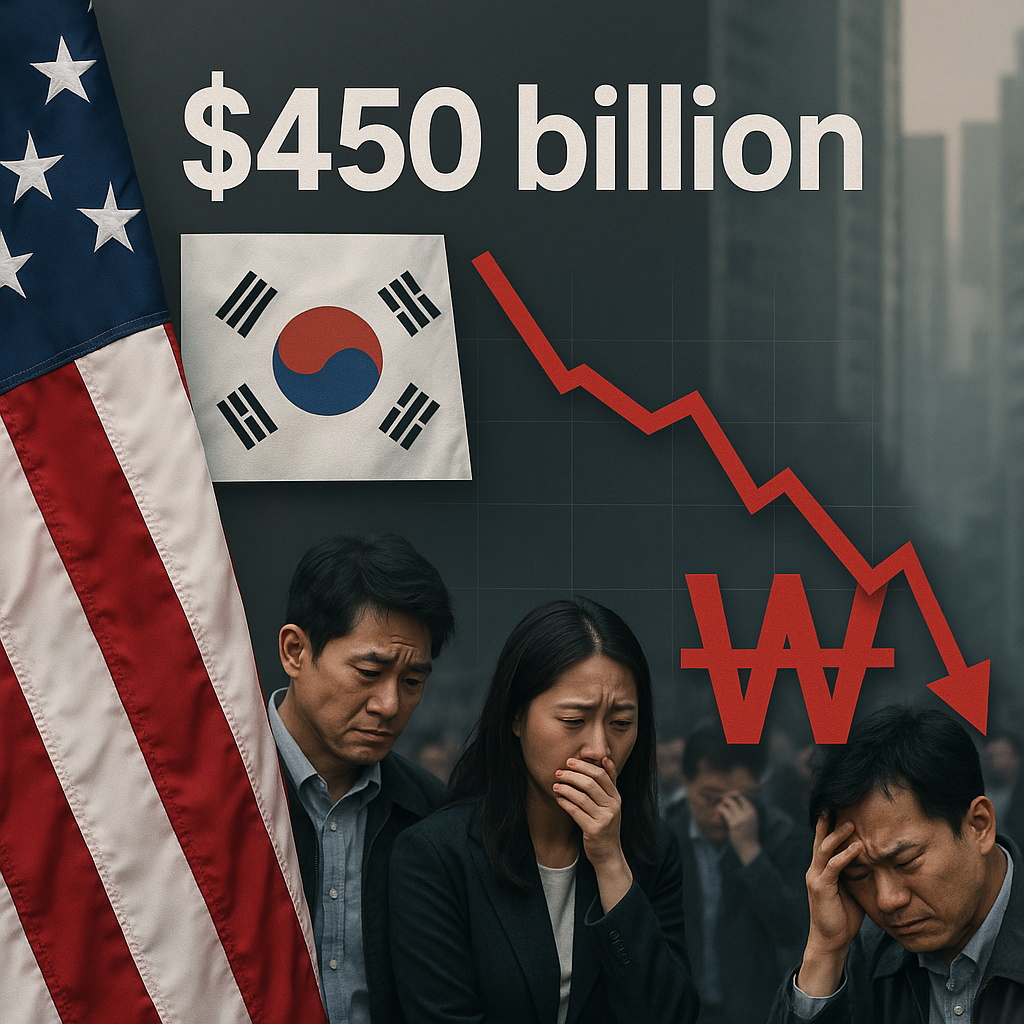
Deadlock at the Core: South Korea–U.S. Trade Pact Stumbles Over Forex and Trump’s Warnings
South Korea’s $350 billion investment pledge to the United States has become the central obstacle to finalizing the trade deal. With limited reserves and no swap lines in place, Seoul fears that the massive outflow could destabilize the won, already trading near ₩1,390 per dollar. Unlike Japan’s $550 billion package, backed by stronger buffers, Korea faces disproportionate risks—turning foreign exchange stability into the decisive factor for the pact’s future.
South Korea–U.S. Friction After Hyundai–LG Georgia Raid: Industrial Strategy Meets Immigration Enforcement
The September 4 raid at Hyundai–LG’s Georgia Metaplant exposed the unresolved contradiction at the core of U.S.–Korea industrial relations: billions in Korean capital are welcomed, but the skilled workers needed to operationalize these projects are shackled under immigration enforcement. What began as a law-and-order spectacle is now a structural liability, forcing Trump to balance MAGA hardliners, electoral pressure, and the urgent need to unblock stalled investments.